
Photographing the Birds of Madera Canyon, Arizona: A Hummingbird-Fueled Journey Into the Sky Islands
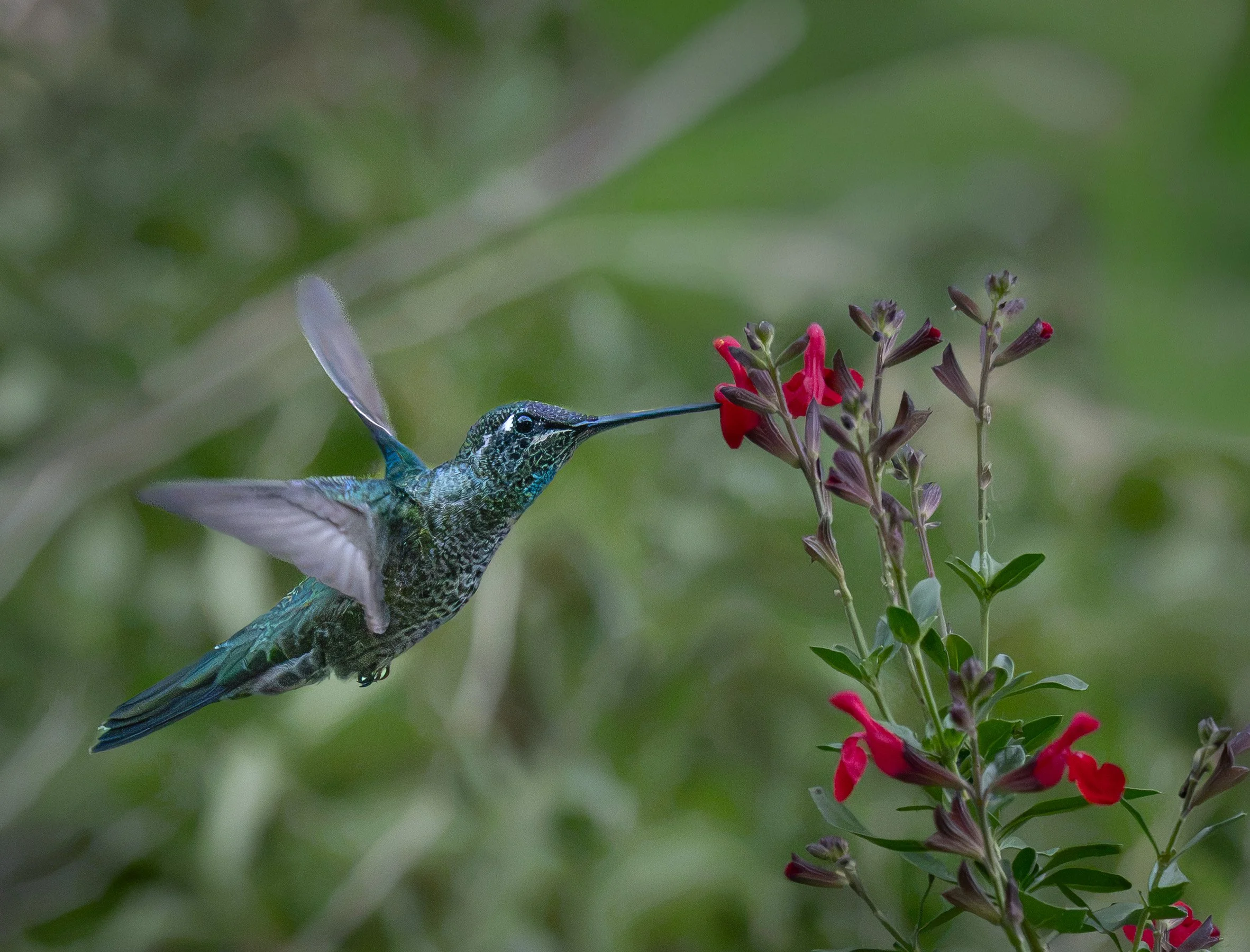
Rivoli Hummingbird
There's a particular kind of quiet that settles over a canyon at 5,000 feet just after sunrise. The kind where the only sounds are running water, the tick of a cooling camera body, and the improbable hum of a dozen hummingbird wings. That's the soundtrack of Madera Canyon, Arizona, and it's why I loaded up the gear and hopped on a plane toward the Santa Rita Mountains this past June.
I've spent years photographing landscapes and wildlife across the national parks of the American West, but this trip was different. This one was about birds, specifically the birds you simply cannot find back home on the East Coast. We only host one hummingbird species where I live. Madera Canyon, by contrast, is famous for pulling in more than a dozen hummingbird species in a single season. Early June sits right in that sweet spot when the summer breeders have arrived and the feeders at Santa Rita Lodge turn into a blur of iridescent chaos. I wasn't going to miss it.
What follows is a photographer's account of the trip, part natural history, part field notes, part photography lesson learned the hard way at 1/2000th of a second.
A Brief History of Madera Canyon
Long before it became a bucket-list stop for birders and photographers, the Santa Rita Mountains were home to the O'odham peoples, whose presence in the region stretches back thousands of years. Later, Spanish and Mexican ranching families moved through the area, and by the late 1800s, American settlers had arrived, one of them built a prominent white adobe house in the canyon, which is how the area got its earlier name, White House Canyon, before it became known as Madera Canyon.
Madera Canyon sits on the northern slope of the Santa Rita Mountains, cradled between two peaks: Mount Wrightson and Mount Hopkins. Today it's managed as part of the Coronado National Forest, with the nonprofit Friends of Madera Canyon working to protect its trails, habitat, and the creek that runs the length of the canyon, lined with white-barked Arizona sycamores and oak-juniper woodland.
Geographically, this is what's known as a "sky island", an isolated mountain range rising out of the surrounding desert, separated from other ranges by miles of arid lowland. Sky islands act like elevators for ecosystems: as you climb from desert scrub near the base to pine forest higher up, you pass through several distinct habitat zones in the space of just a few miles. That vertical stack of ecosystems is exactly why Madera Canyon supports over 250 recorded bird species, an extraordinary number for such a compact area. Also can be seen are black bears, bobcats, ring-tailed cats, mountain lions, mule deer, and colorful wild turkeys wandering the forest floor.
If you've spent any time around serious birders, you've probably heard Madera Canyon mentioned in the same breath as the Elegant Trogon, a tropical species that reaches the very northern edge of its range here and draws visitors from around the world every spring. We didn't see a trogon on this trip but that's a good excuse to go back. What we did see more than made up for it.
Why June, and Why Hummingbirds
Madera Canyon's proximity to Mexico means it plays host to species that show up almost nowhere else in the United States. Hummingbirds are the headliner. Because the canyon straddles several habitat types and elevations, it can record as many as 15 hummingbird species in a good year. Coming from a part of the country where the Ruby-throated Hummingbird is essentially the only game in town, standing on the porch at Santa Rita Lodge watching three or four different species trade places at the feeders felt like cheating.
June puts you right in the window when summer breeding species have settled in alongside a few lingering spring migrants, and the feeder activity is about as reliable as it gets. The lodge's feeder decks have been drawing birds and photographers for decades, and they became our home base for the majority of the trip.
Photography Tips for Hummingbirds and Woodland Birds
Before we get to the individual species, a few lessons from the field that might save you some frustration (and some blown highlights):
Shutter speed is everything with hummingbirds. You essentially have two creative choices. Push your shutter speed up to 1/2000th of a second or faster and you'll freeze individual wingbeats, capturing that crisp, almost sculptural look where every feather is sharp. Drop down into the 1/60th to 1/250th range instead, and you'll get that dreamy motion-blur effect on the wings while the body and head stay relatively sharp, a look that does a much better job of conveying how alive and fast these birds really are. Neither approach is "correct." I'd encourage you to shoot both on the same bird and compare; you may be surprised which one you prefer once you're back at the computer.
Light quality matters more than light quantity. The hour after sunrise and the hour before sunset give you soft, warm, directional light that brings out the full iridescence of a hummingbird's gorget, that flash of color on the throat that can look completely black in flat midday light. Position yourself so the sun is at your back and the bird's throat feathers face the light; that's when the ruby, violet, and emerald tones really ignite.
Pre-focus and be patient. Hummingbirds are creatures of habit. They tend to favor the same perch or approach the same feeder port repeatedly. Rather than chasing focus on an erratic flying target, I found it far more productive to pick a perch, dial in focus on that spot, and simply wait for the bird to return to it.
A plain, dark background is your best friend. The Santa Rita Lodge setting naturally offers shaded woodland behind the feeders, which renders as a soft, out-of-focus backdrop and lets the bird's colors pop. When you have the choice, position yourself so there's distance between your subject and the background. The more that distance is, the creamier your blur.
Don't neglect the perched shots. Everyone chases the wings-spread hover shot, and rightly so, but some of my favorite frames from this trip are quiet portraits of birds resting between feeder visits, showing off detail you lose entirely in a fast-shutter flight shot.
For the woodpeckers, jays, and finches, a slightly slower approach works better than the hummingbird hustle. These species tend to move through in waves, foraging methodically. I had good luck simply picking a productive tree or feeder area, setting up a stable position, and letting the birds come to me rather than working the trails aggressively.
The Birds We Photographed
Rivoli's Hummingbird
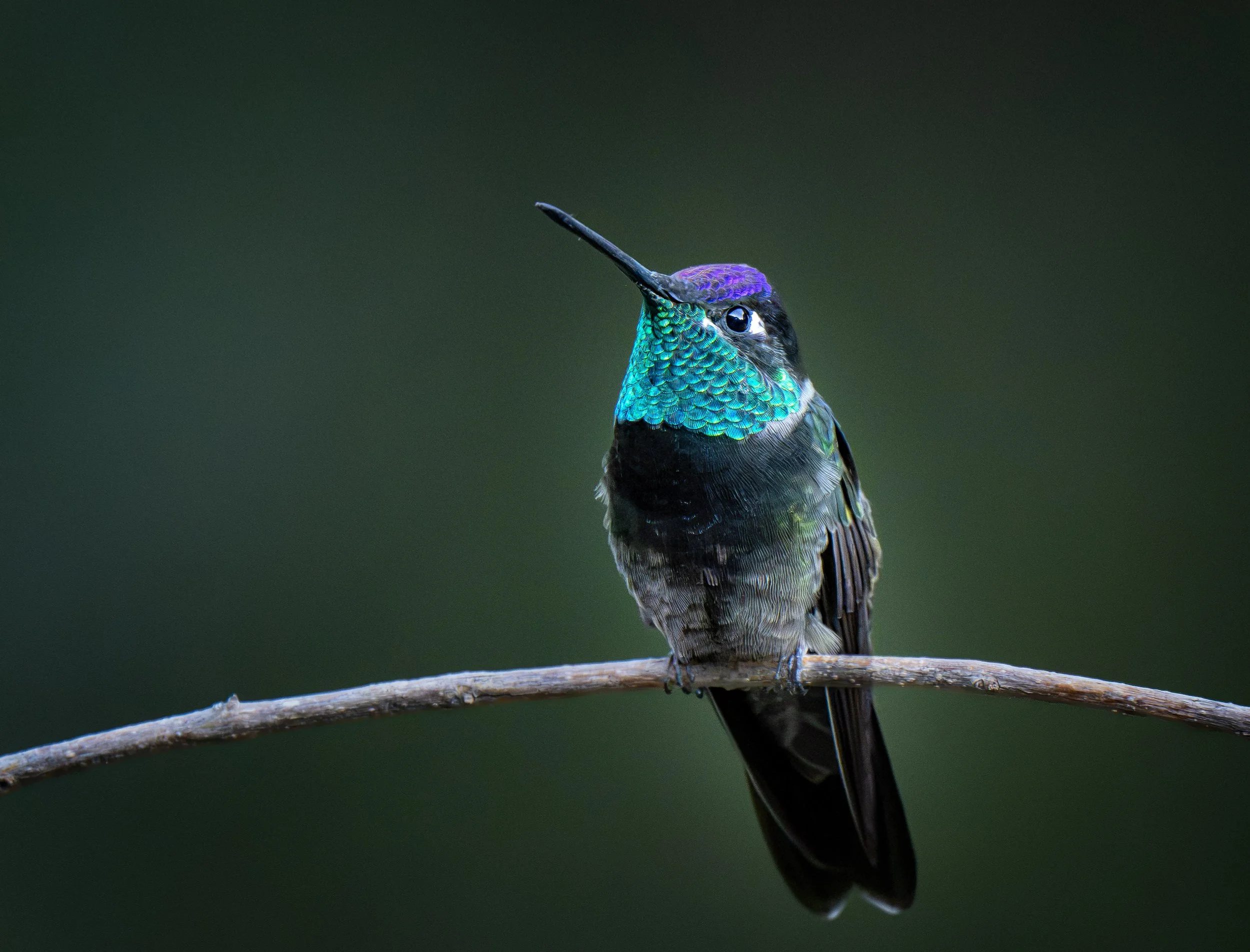
Formerly known as the Magnificent Hummingbird, this is one of the largest hummingbirds found in the United States, and it shows. At the feeders, this bird has real presence, a big-bodied silhouette with an iridescent violet crown and an emerald throat that only reveals its full color at the right angle. Watching one muscle smaller hummingbirds off a feeder port was a good reminder that size hierarchies exist even among birds that weigh a few grams.
Black-chinned Hummingbird
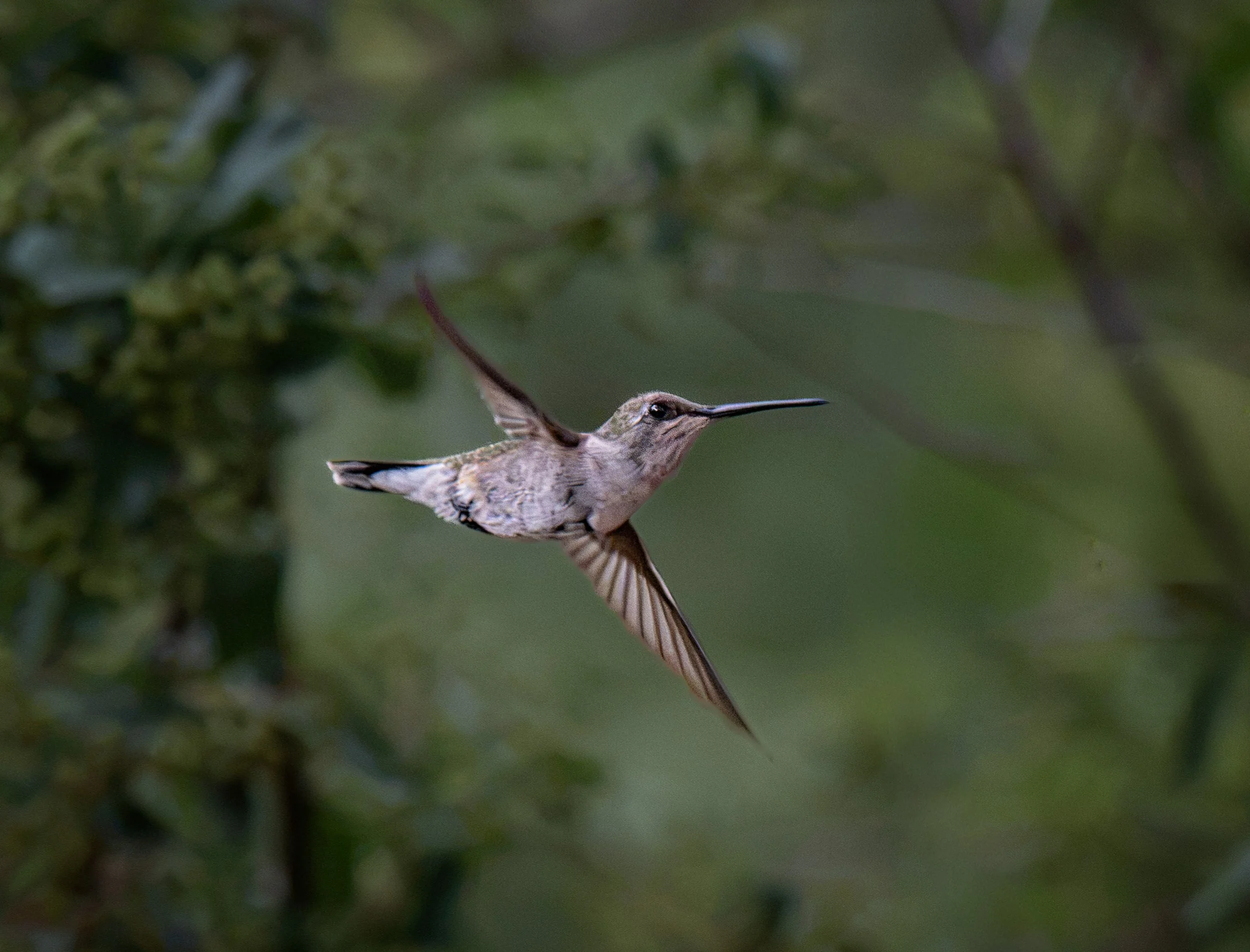
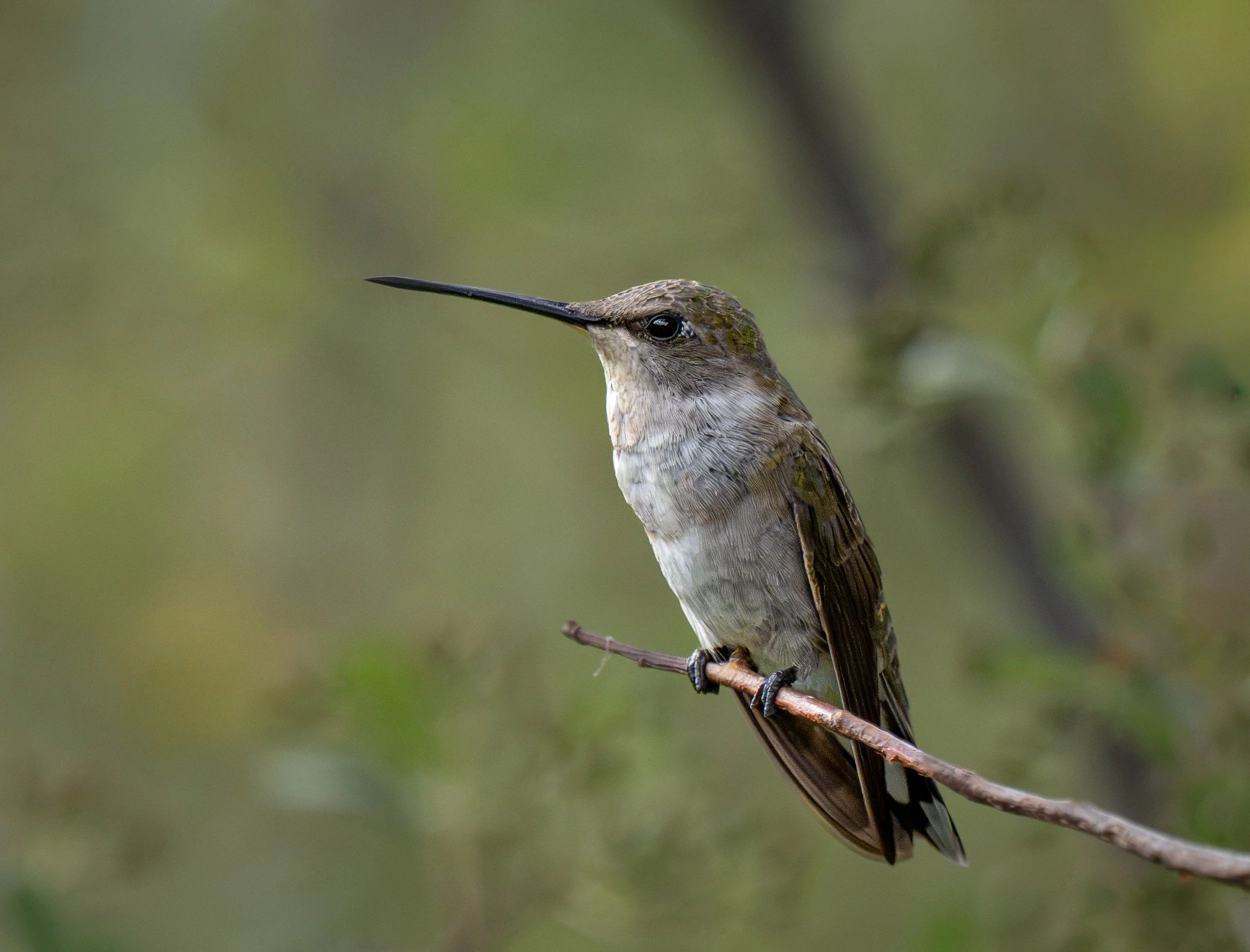
The workhorse hummingbird of the Southwest, and probably the species we photographed most often simply because of sheer numbers. In shade, the male's throat looks solid black; tilt into the light and a narrow band of iridescent purple appears along the lower edge. It's a great species for practicing the freeze-versus-blur shutter speed technique, since they're constant, reliable visitors to the feeders.
Broad-billed Hummingbird
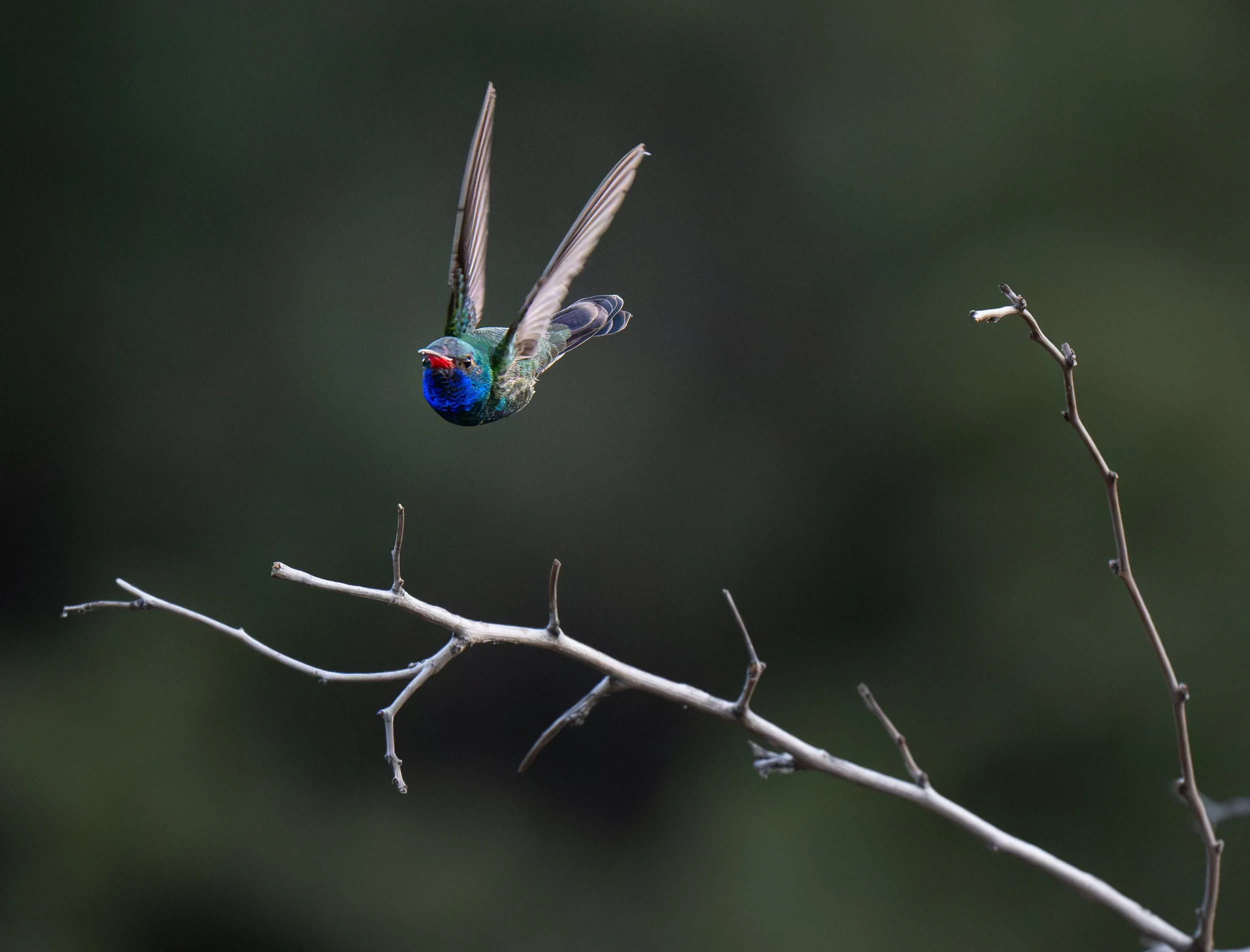
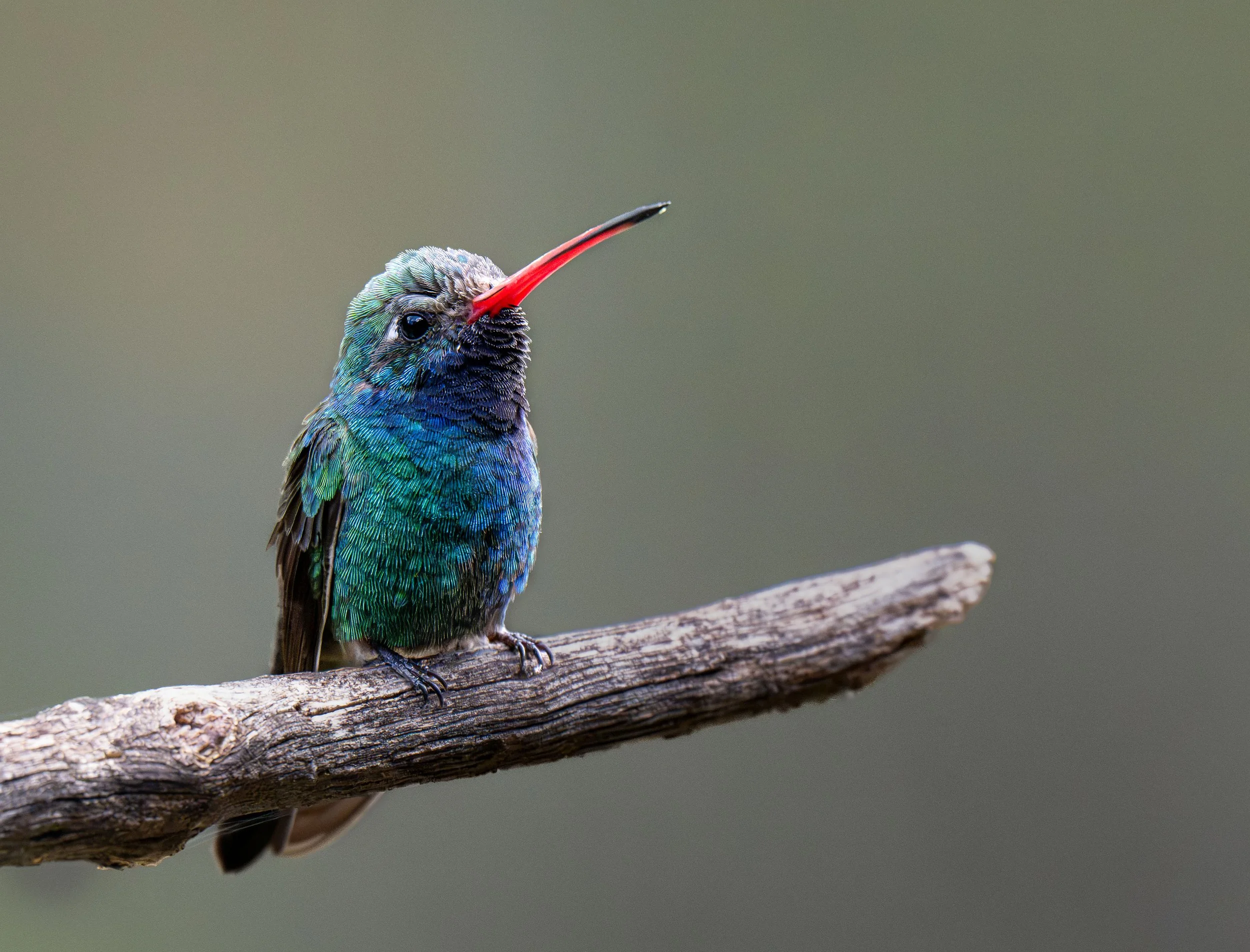
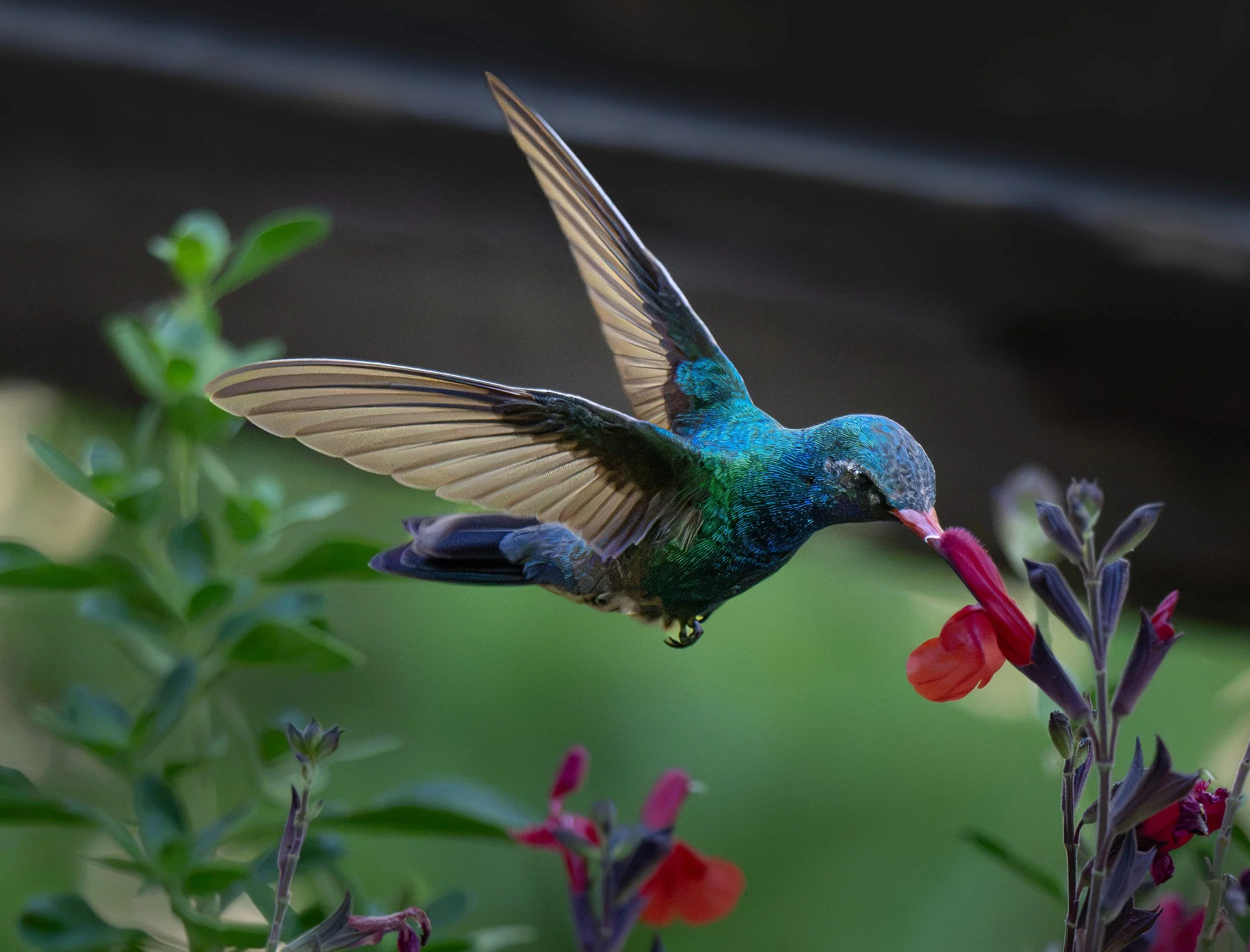
Hands down one of the most striking birds of the trip. The male's iridescent blue-green body paired with a bright red-orange bill makes it almost look like it was designed by committee to be as photogenic as possible. This species tends to favor lower, brushier habitat, and we had our best luck with it in the early morning hours.
Acorn Woodpecker
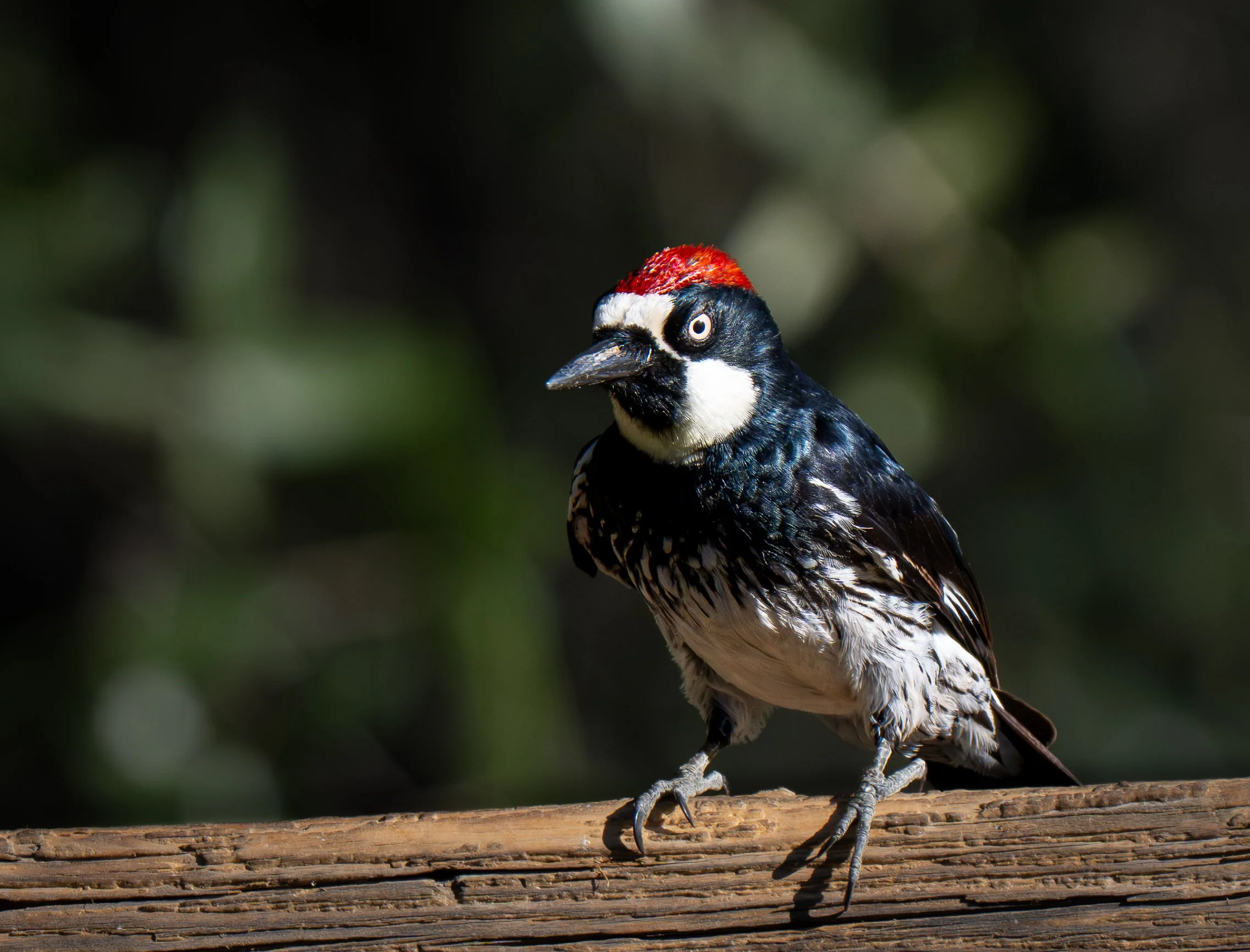
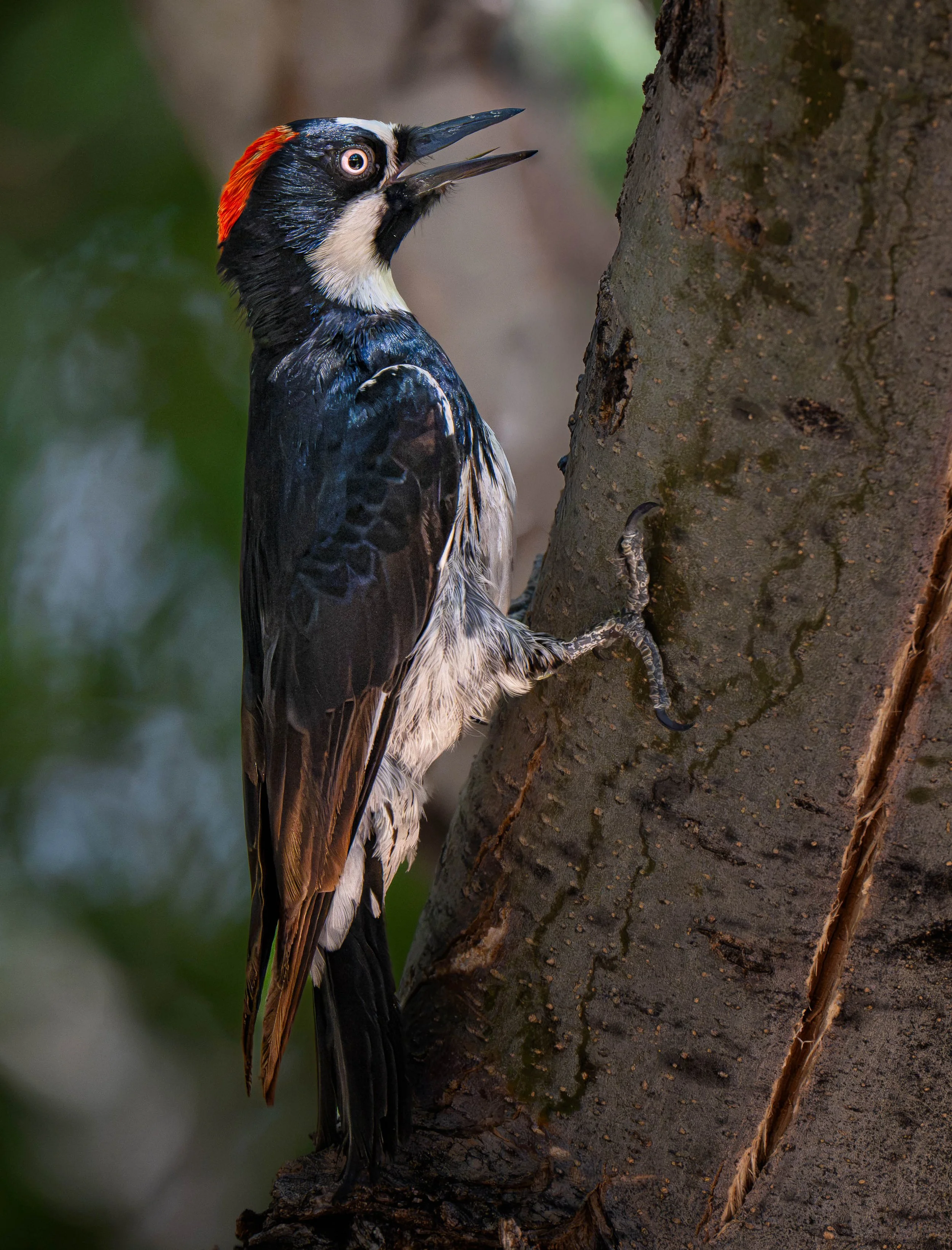
Clownish, social, and endlessly entertaining to photograph. Acorn Woodpeckers live in extended family groups and spend an enormous amount of energy drilling and defending "granary trees" riddled with thousands of acorn-sized holes, each stuffed with a single acorn for later. Their white eye and black-and-white harlequin face make for a striking portrait subject, especially against the warm bark of an oak.
Arizona Woodpecker
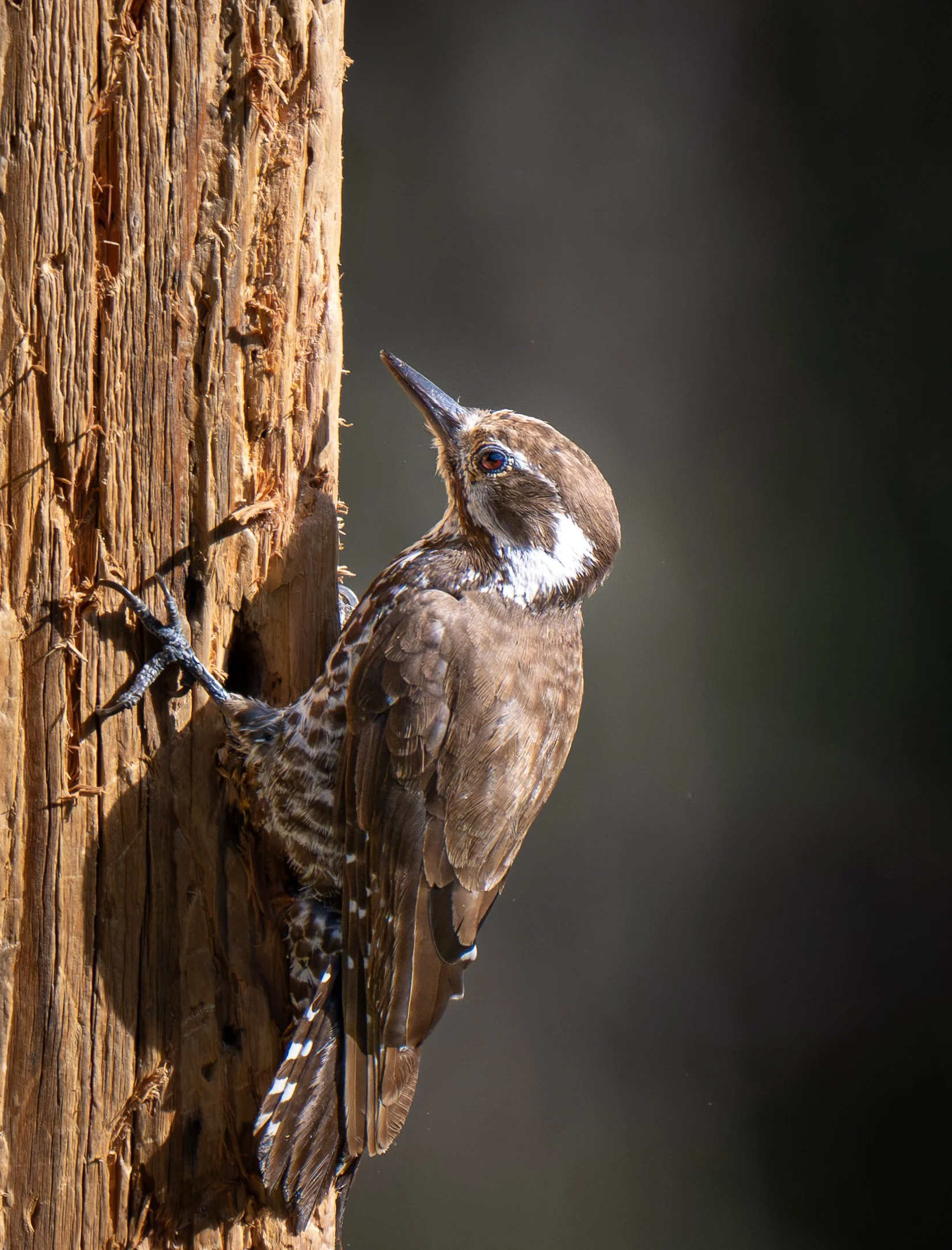
This one is a genuine specialty bird. It's the only brown-backed woodpecker found in the United States, and its range barely creeps north across the border from Mexico into these sky-island mountain ranges. Finding and photographing one felt like a small trophy of the trip. It’s proof that this canyon really does offer species you can't get almost anywhere else in the country.
Mexican Jay
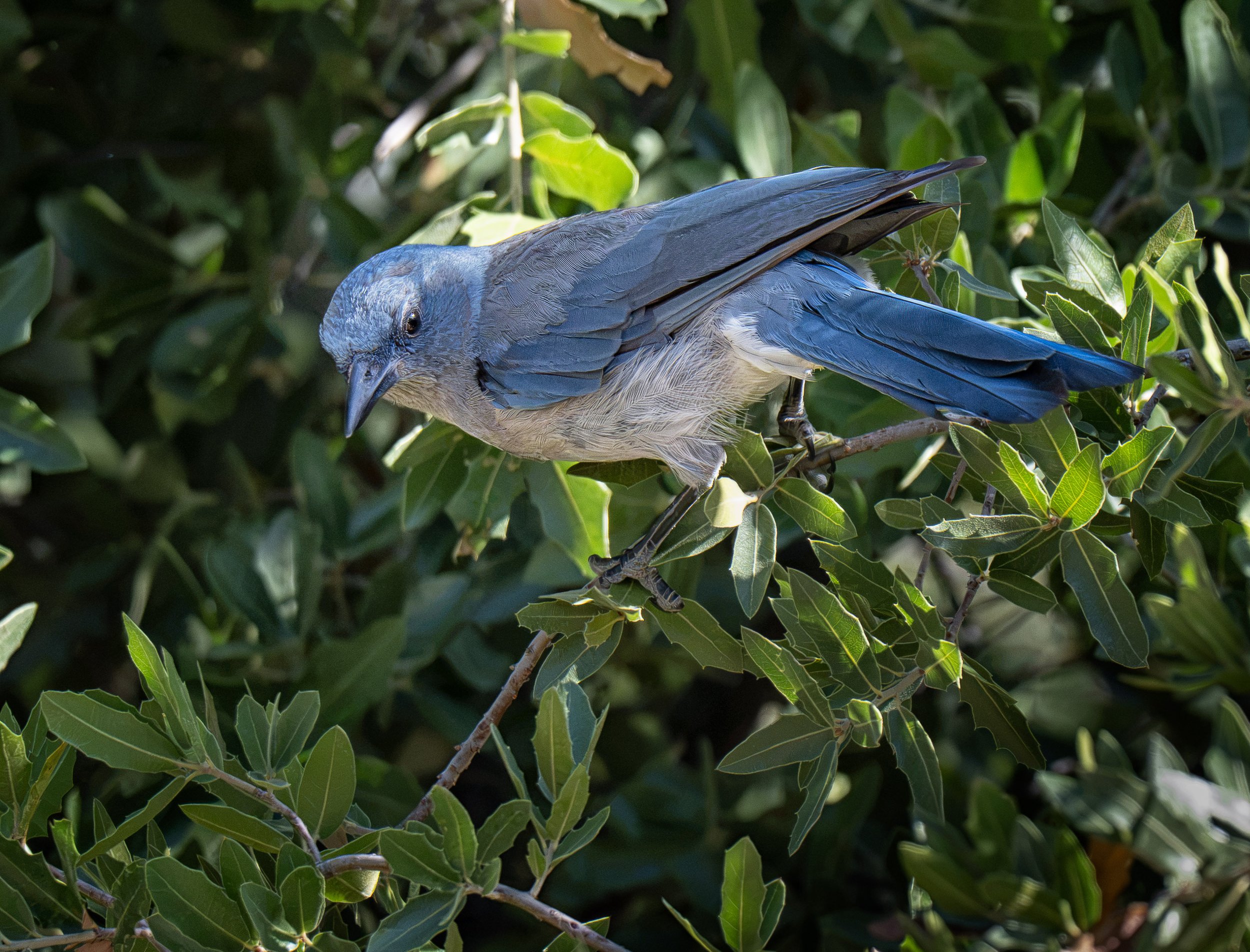
Bold, inquisitive, and impossible to ignore. These pale blue-and-gray jays travel in extended family flocks and have a habit of checking out anything new in their territory, including a photographer with a long lens. Their plain, unmarked blue back (no crest, unlike a Blue Jay) makes them easy to identify and satisfying to photograph against the canyon's oak woodland.
Bridled Titmouse
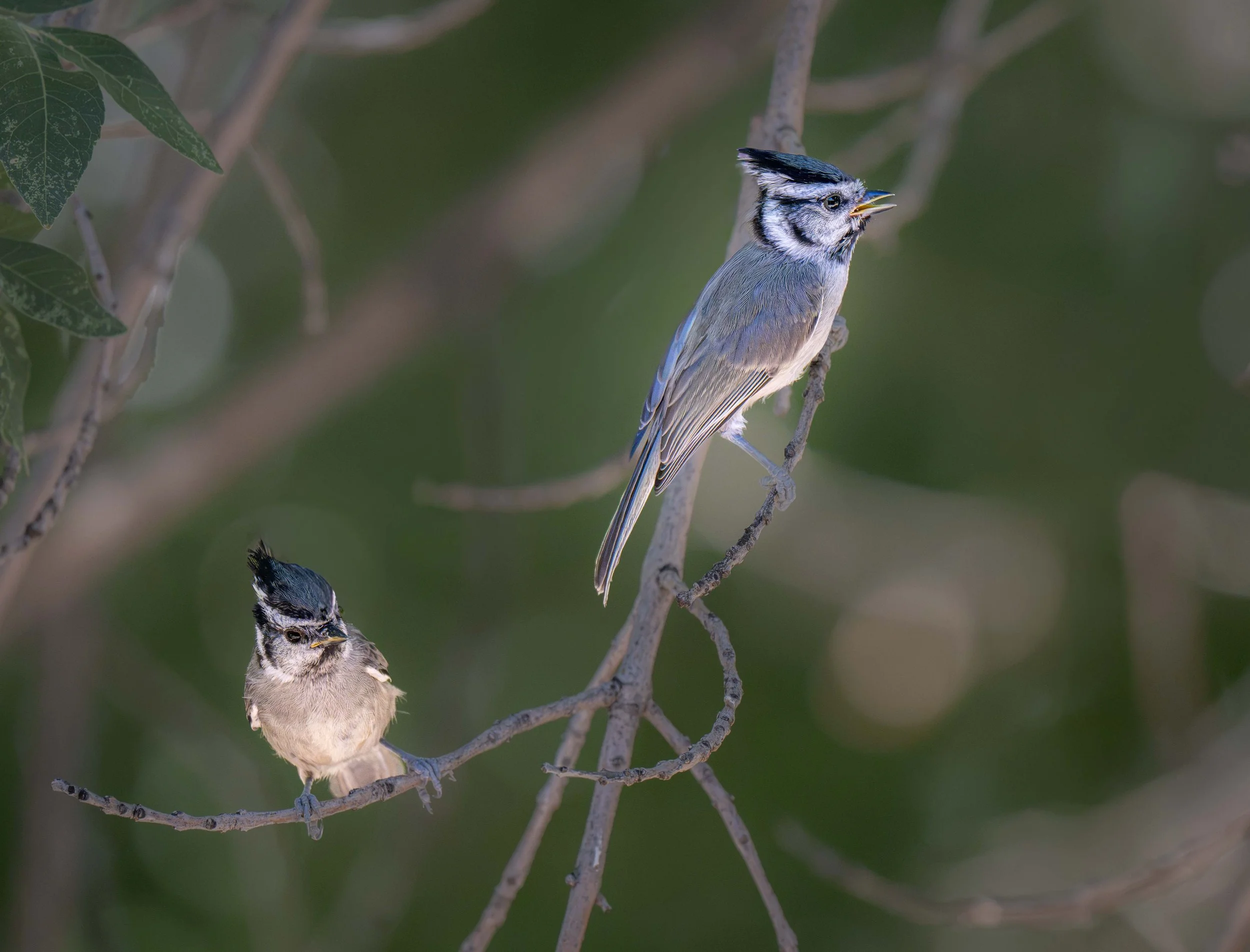
Small, energetic, and sporting a genuinely unusual "bridled" facial pattern, a black-and-white harness-like marking across the face that no other North American titmouse shares. They rarely sit still for long, which made this one of the more technically challenging portraits of the trip; a lot of missed frames before a pair finally paused in decent light.
House Finch
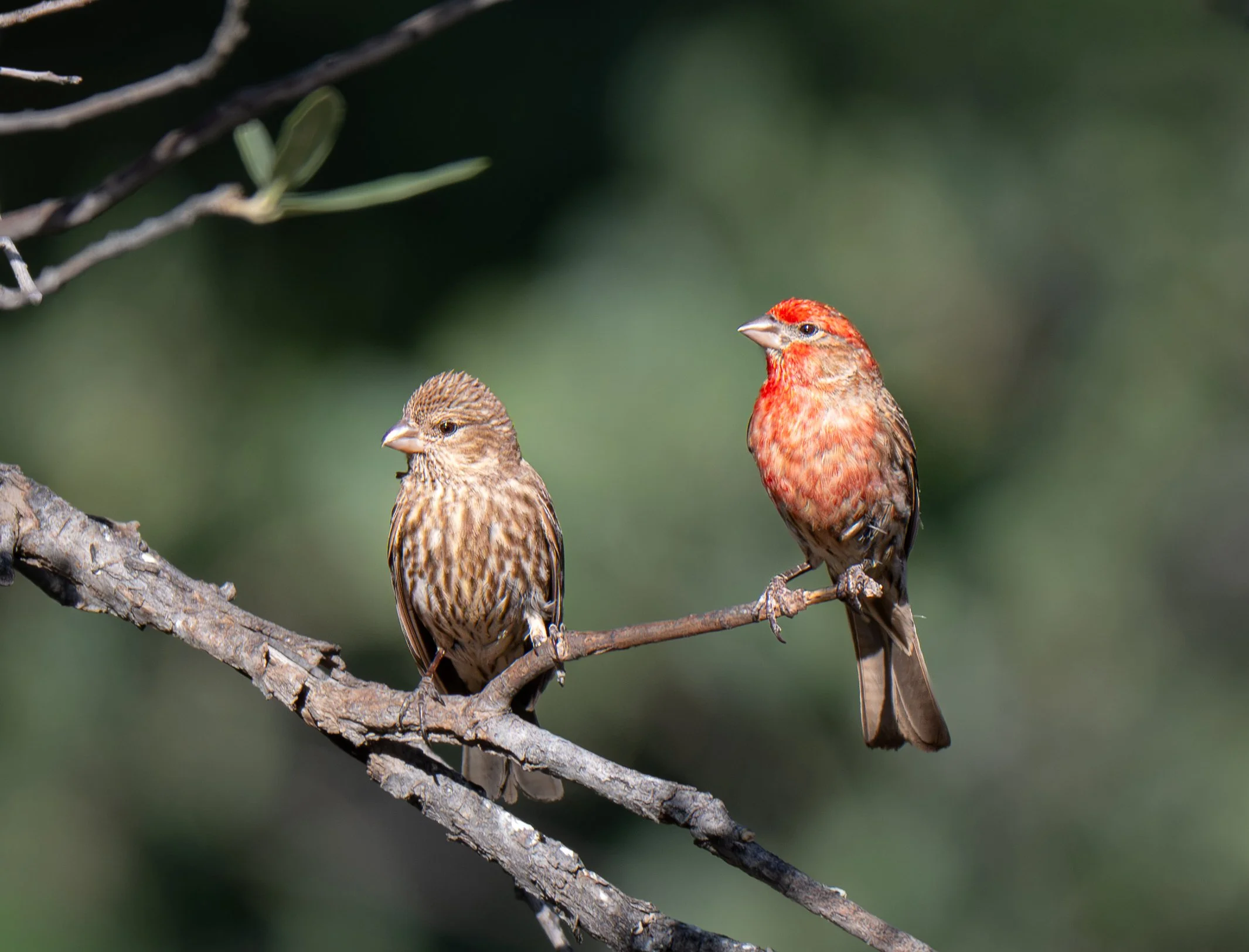
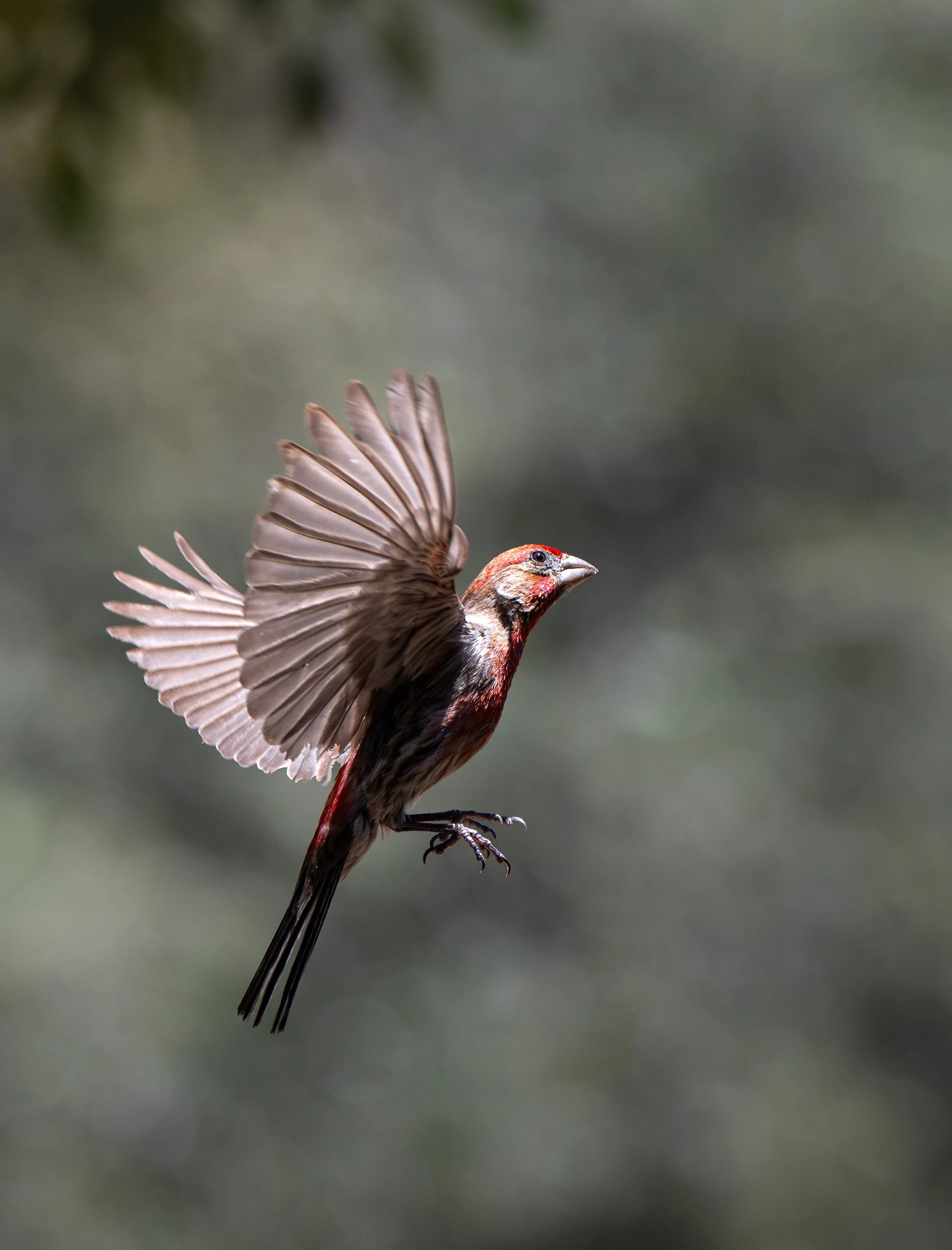
A familiar face for many of us back home, but no less enjoyable to photograph against the backdrop of the canyon. The rosy red wash across the male's head and breast of which the intensity actually depends on their diet. The first image of a he and she pair while the second image of a male approaching a feeder with a beautiful wing span.
Lesser Goldfinch
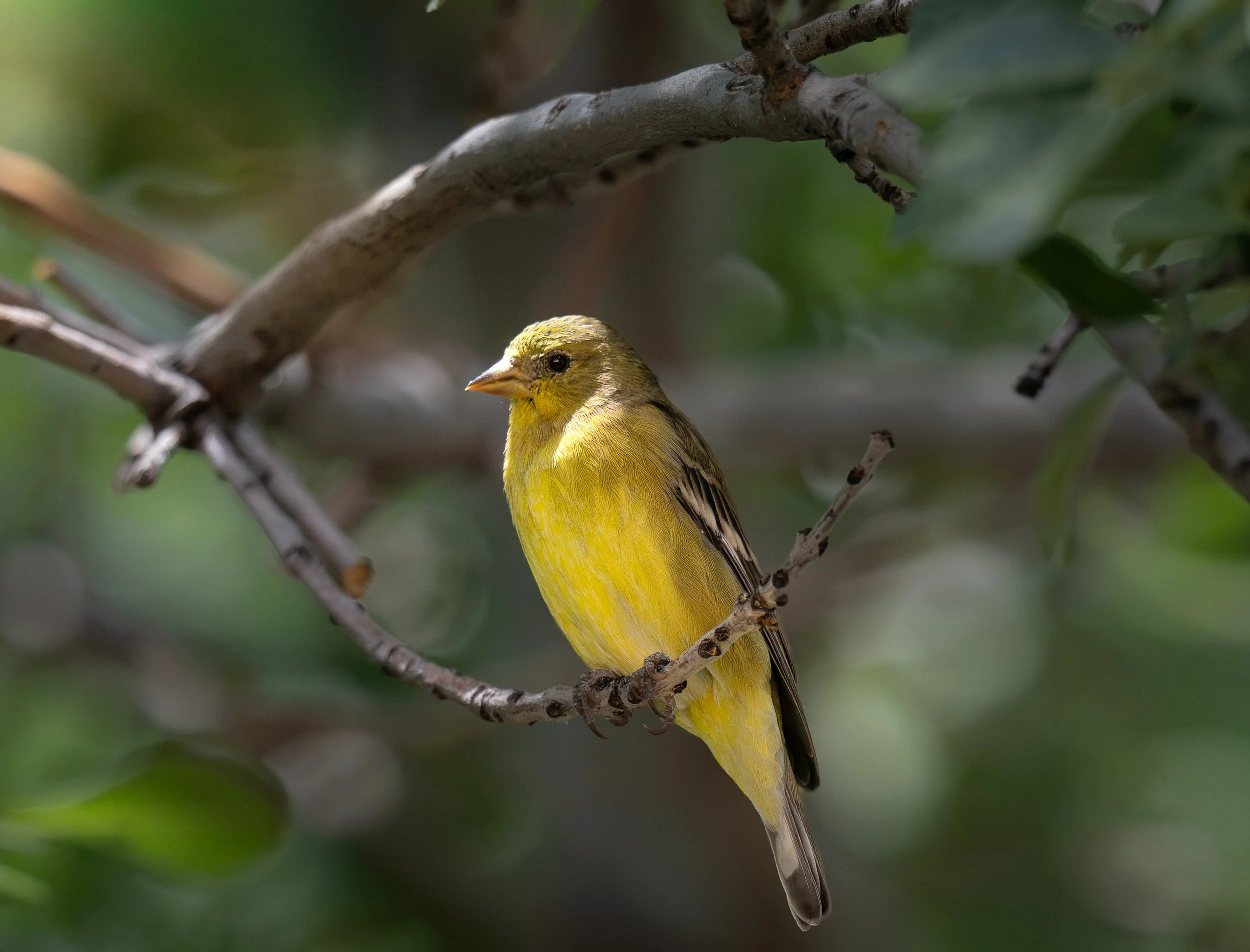
A tiny, bright bundle of yellow and black that moved through the feeder area in small, chattering flocks. Because they rarely stay still, I found the best results came from pre-focusing on a favored perch, exactly like the hummingbird technique, rather than trying to track them in flight.
Hooded Oriole
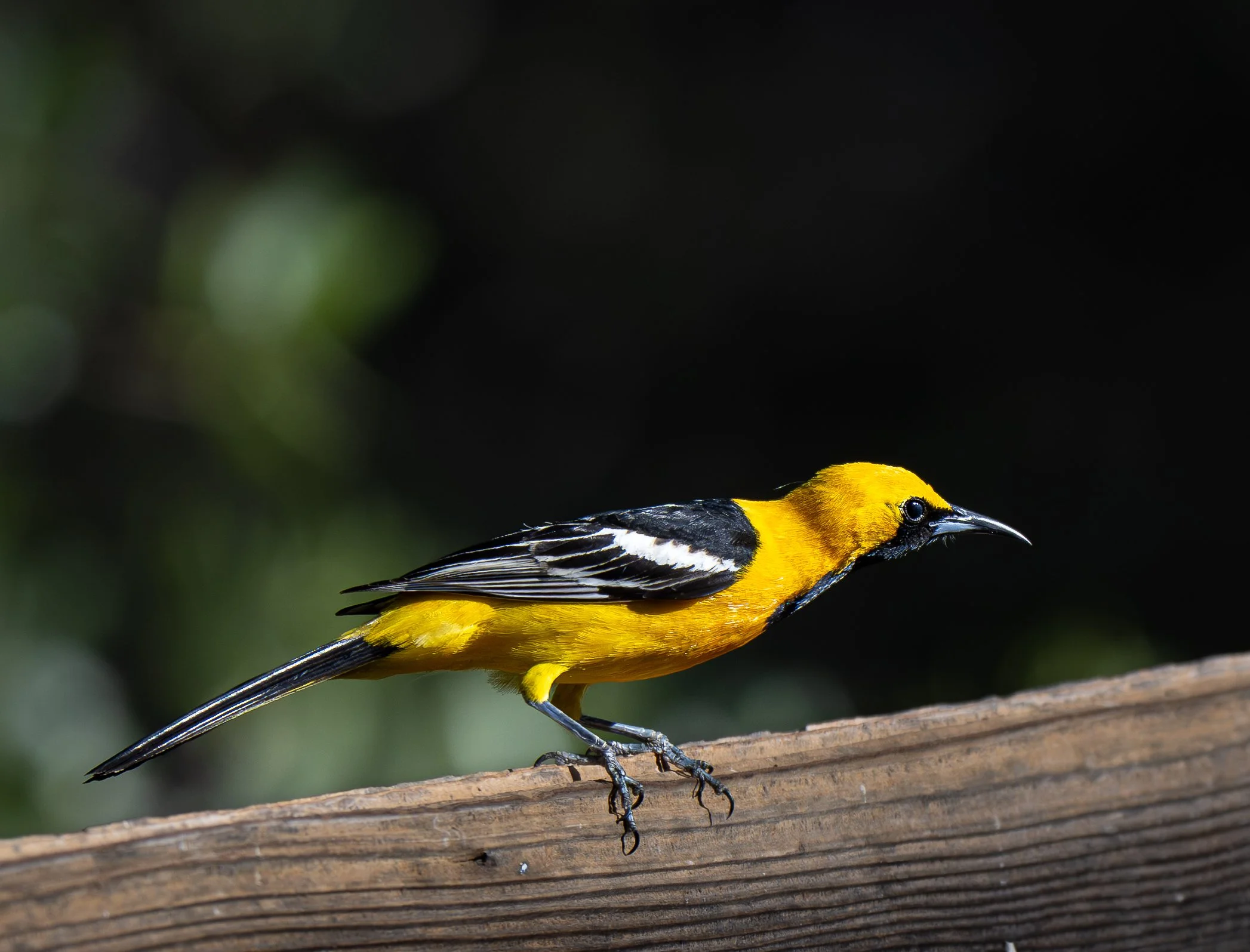
One of the real showstoppers of the trip. The male's flame-orange body and crisp black bib make it one of the most photogenic songbirds in the canyon, and the species has a strong association with fan palms, which it favors for nesting. Getting a clean shot against green foliage, with that orange practically glowing, was one of the highlights of the whole week.
White-winged Dove
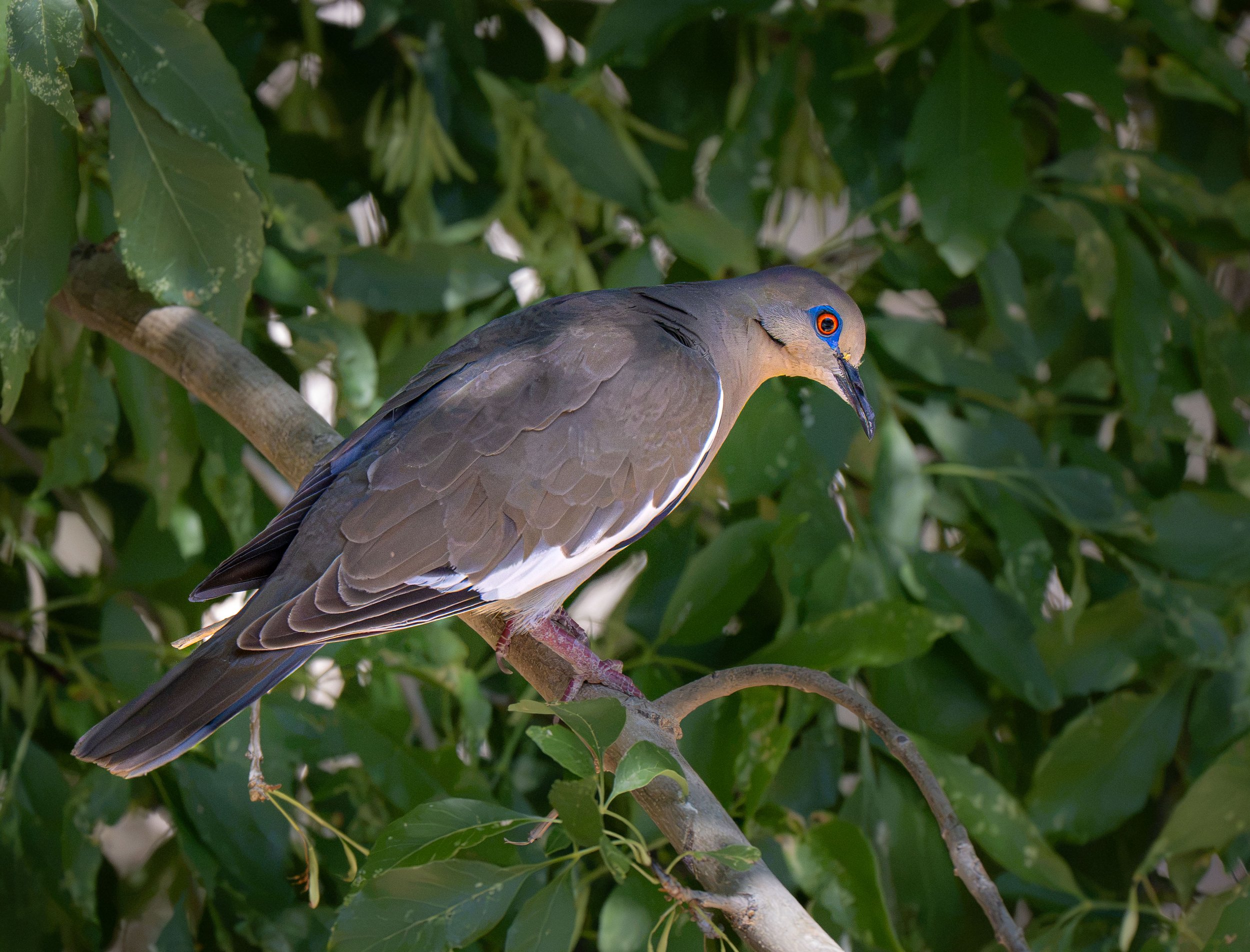
Easy to overlook next to the flashier species, but a handsome bird in its own right, with a soft gray-brown body, a striking white wing bar, and a ring of blue skin around a bright orange eye. These doves were regular visitors to the ground beneath the feeders, giving us some nice low-angle opportunities.
Black-headed Grosbeak
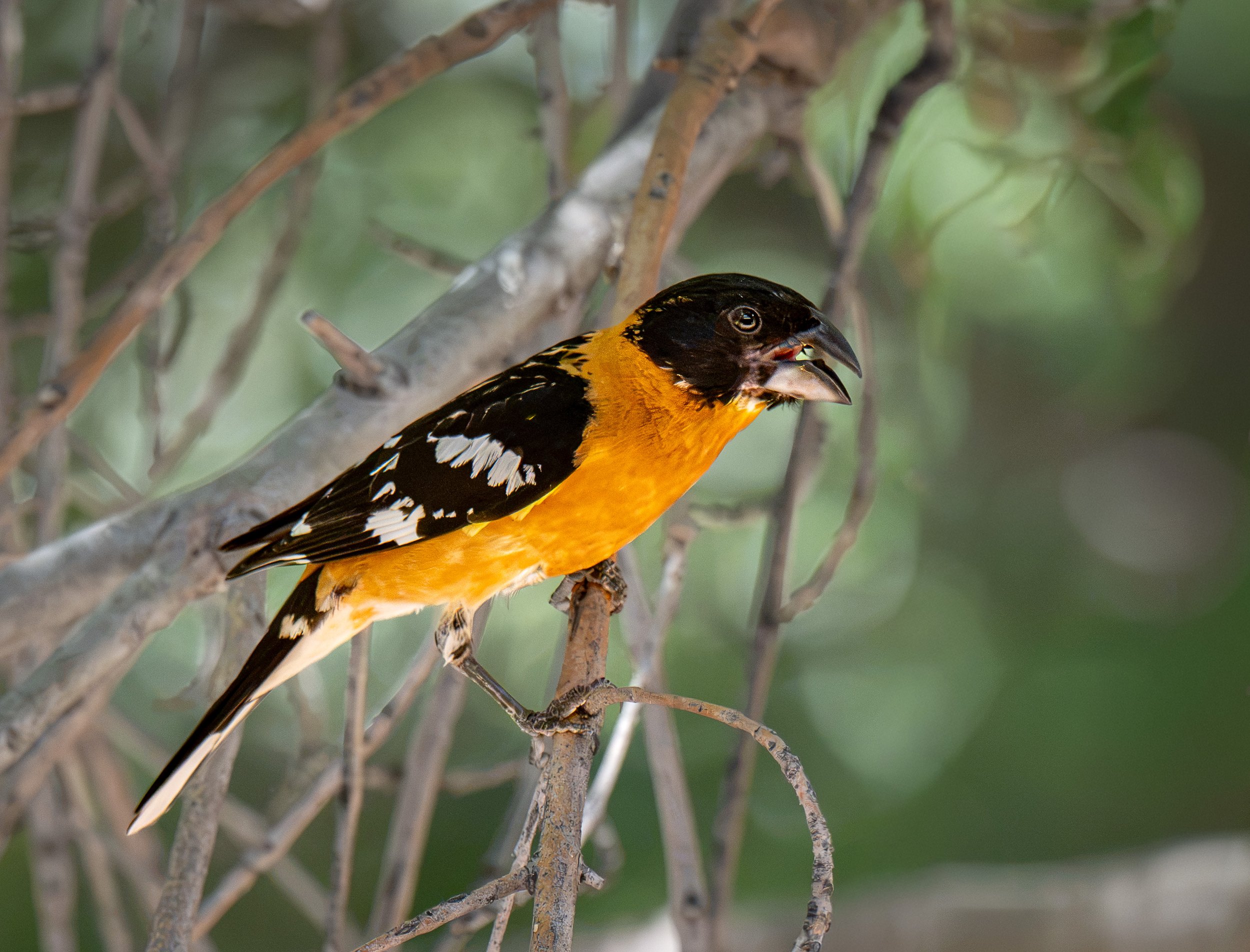
A chunky, colorful finch relative with a burnt-orange body, black head, and a substantial pale bill built for cracking seeds. We found these more often along the creek-side trails than at the feeders themselves, foraging quietly in the streamside vegetation.
An Unexpected Guest: The Black Bear
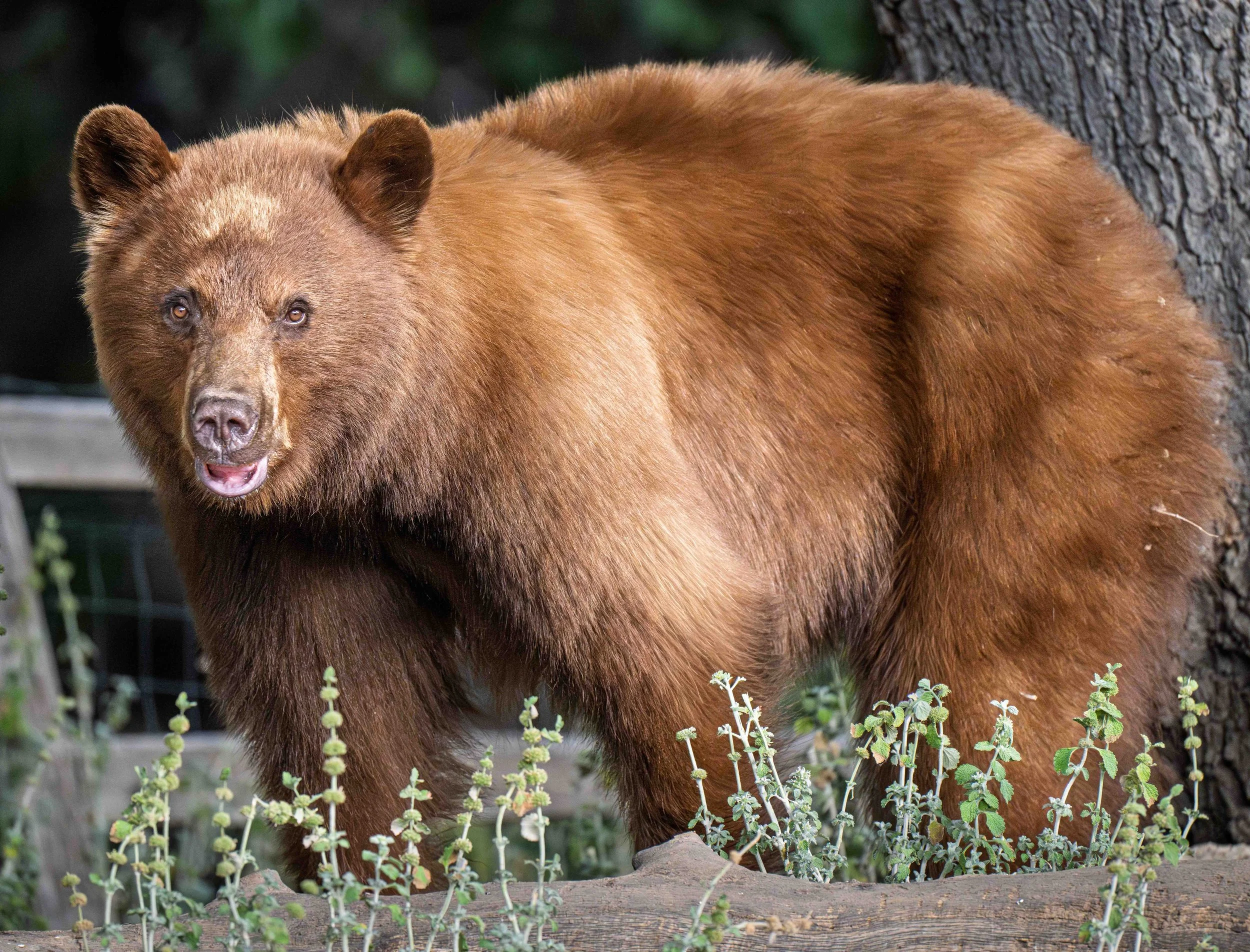
Not every memorable subject in Madera Canyon has feathers. As we were photographing hummingbirds at the lodge, we spotted this movement out of the corner of our eye. For a brief moment we froze as we came face to face with a cinnamon black bear working its way through the property. Black bears are genuinely part of the wildlife community here, along with mountain lions, bobcats, and ring-tailed cats, and while they're not the main draw for most visitors, a reminder that you're a guest in real, functioning wilderness is never a bad thing. We gave it plenty of space, got a few frames from a safe distance, and let it go about its business. It's the kind of encounter that sticks with you longer than almost any bird photo from the trip and a good reminder to stay alert and know a bit about bear safety before you head out on the trails.
Final Thoughts
Madera Canyon delivers on its reputation. In a single week, we came home with images of species I'd never had the chance to photograph in decades of shooting back east, in a landscape that shifts from desert scrub to pine forest in the span of a short drive. If you're a photographer chasing western hummingbirds, or just curious what a "sky island" ecosystem looks like up close, June is a genuinely excellent window to visit. The feeders are busy, the light is good, and you never quite know what's going to show up around the next bend in the trail.
Comments are always welcome.