
White Mountains Fall Foliage: A Photographer’s Guide to Early Autumn Color in New Hampshire
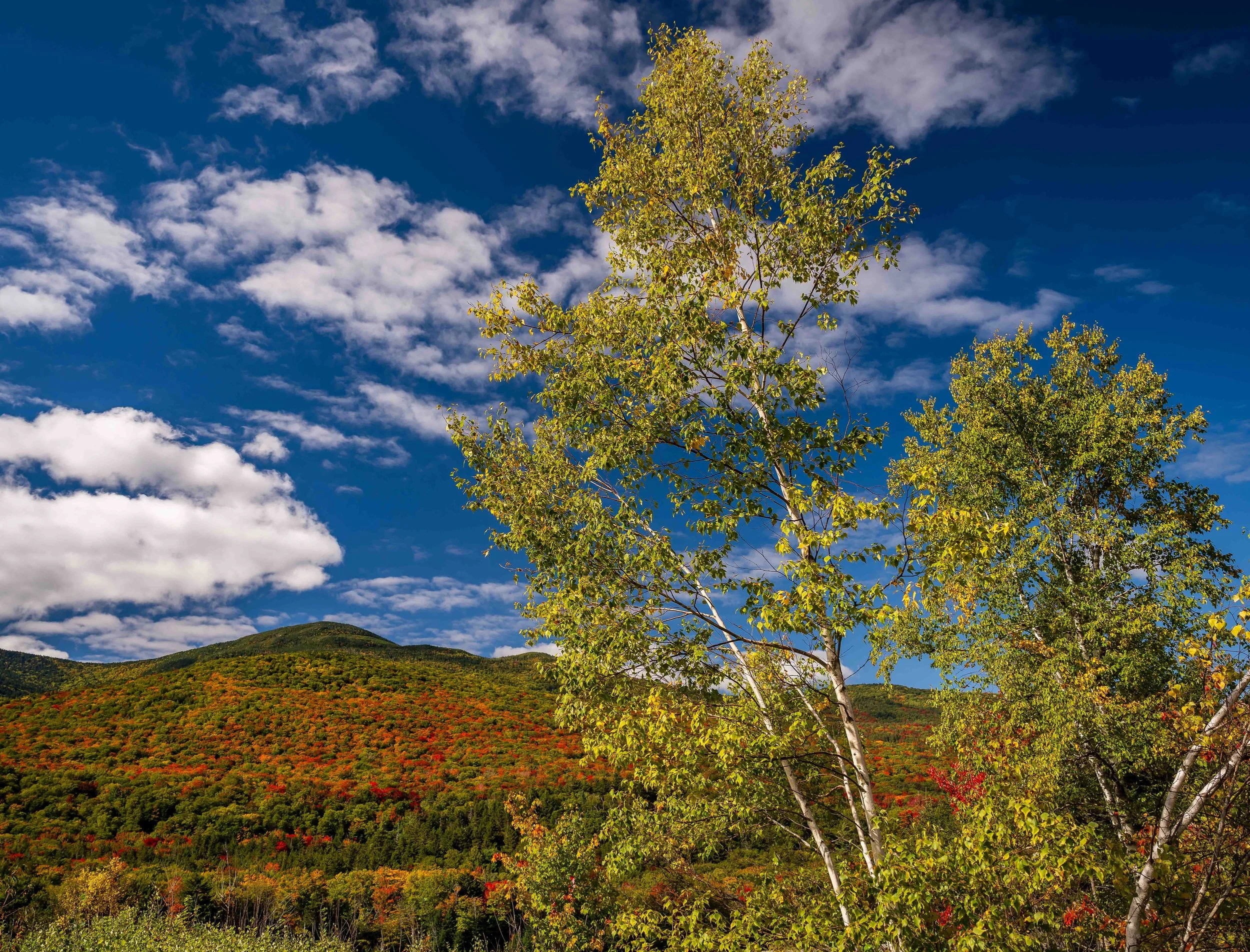
Some trips are good. Some trips make you want to turn around and do the whole thing again the minute you get home. Our fall foliage adventure in the White Mountains of New Hampshire was the second kind!
My goal was a little unconventional. Instead of timing everything for peak color, when every hillside is ablaze and every parking lot is full, I wanted to arrive at the start of the season. That’s my favorite window to photograph. A few maples had already turned a brilliant red, birches were flashing gold, and plenty of leaves were still a rich summer green. That mix gives a landscape depth you can’t get at peak, when everything is one color. And with only a handful of bare trees, I could still fill the frame with color without a lot of stark branches.
It worked beyond anything I’d hoped. We had fantastic sunrises that lit up the valleys in pink and gold, with fog pooled in the low spots. We found amazing waterfalls and cascades, with the early color framing nearly every one. And we photographed a number of covered bridges for a special project I’m working on. I’m keeping the details under wraps for now, but I promise to share more in time.
The trip was a huge success and exceeded every expectation. Let me take you through it!
Why I Chase Early Foliage (and Why You Might Too)
Everyone talks about peak foliage, and for good reason. But there are real advantages to arriving early:
Better contrast. Green, yellow, orange, and red together make a more layered image than a single wall of one color.
Fewer crowds. Early in the season you’ll often have overlooks and trailheads almost to yourself, especially at sunrise.
Lower risk. Peak timing is a gamble. A windy, rainy week can strip the trees almost overnight. Arriving early gives you a cushion.
Elevation works in your favor. Higher elevations turn first, so you can follow the color up and down the mountains over a few days.
The trade-off is that colors can be patchy, so you have to hunt a little. That’s half the fun.
A Brief History of the White Mountains
The White Mountains stretch across northern New Hampshire and reach into western Maine. They are part of the Appalachian chain, and their rugged granite peaks were shaped by ancient geology and then sculpted by glaciers. Those glaciers left behind the deep notches (mountain passes), polished rock, and unusual features, like the potholes at The Basin, that make the region so photogenic.
Long before European settlers arrived, Native peoples, including the Abenaki, lived in and traveled through these mountains. The region became a tourist destination in the 1800s. Painters from what became known as the White Mountain School made the landscape famous, and their romantic images drew city dwellers north. Grand hotels followed, along with railroads, and the White Mountains became one of America’s earliest vacation destinations.
Logging was also big business in the late 1800s, and heavy cutting alarmed conservationists. That led to the Weeks Act of 1911, which allowed the federal government to protect forest land in the East. The White Mountain National Forest was established in 1918 and today covers roughly 800,000 acres. It is a big reason so much of this land is still wild and open to explore.
Why the White Mountains Are Exceptional for Fall Foliage
New England is famous for fall color, and the White Mountains are one of its best stages. Here are a few reasons:
A diverse forest. Sugar and red maples supply the fiery reds and oranges. Birch, beech, and aspen add yellow and gold, and evergreens provide a dark backdrop that makes every other color pop.
Dramatic elevation changes. Color arrives in waves, starting high and working its way down, so the season lasts longer than in flatter places.
Water everywhere. Rivers, ponds, waterfalls, and cascades give you reflections and moving water to pair with the color.
Scenic roads and overlooks. You can see a lot without hiking far, and many great spots are a short walk from the car.
Cool nights and bright days. These conditions help bring out the reds, and they make for the misty mornings photographers love.
Interesting Facts About the White Mountains
Mount Washington rises to 6,288 feet, the highest peak in the Northeast. It’s famous for fierce weather, including a wind gust of 231 mph recorded in 1934, a record that stood for decades.
The Kancamagus Highway is a scenic route of roughly 34 miles and a favorite of foliage chasers.
The Old Man of the Mountain, a granite profile in Franconia Notch and the state’s longtime symbol, collapsed in 2003. It still appears on New Hampshire’s state quarter and highway signs.
The Mount Washington Cog Railway, opened in 1869, is often cited as the world’s first mountain-climbing cog railway.
New Hampshire has dozens of historic covered bridges, and several are tucked into the White Mountains region.
Photo Locations, Stories, and Tips
C.L. Graham Wangan Overlook at Sunrise
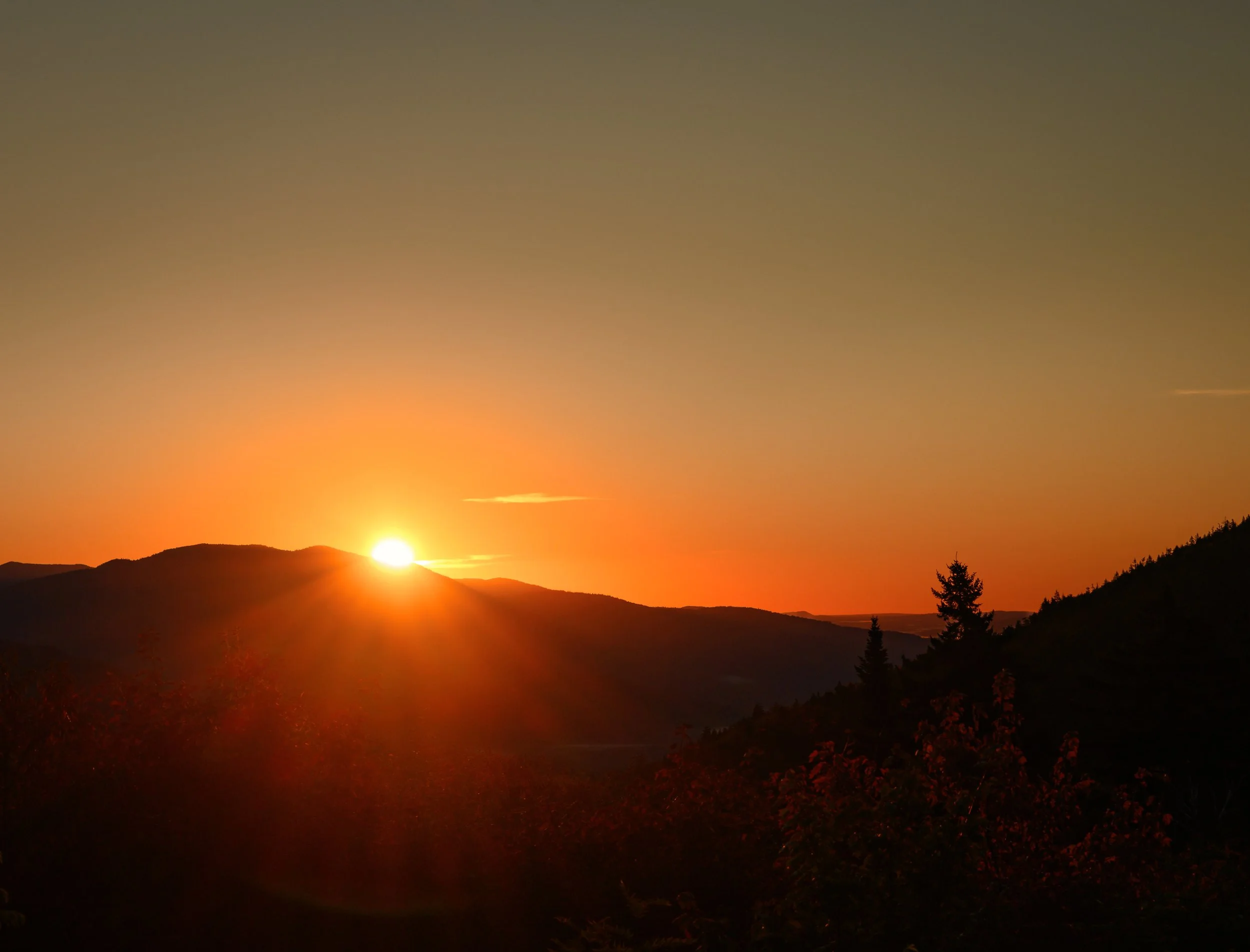
Sunrise paints the ridgelines from the C.L. Graham Wangan Overlook along the Kancamagus Highway.
This overlook on the Kancamagus Highway is a wonderful place to start the day. We arrived in the dark, set up, and waited as the sky shifted from deep blue to a soft glow over the ridgelines. As the light hit, the hillsides showed all the patchwork of early fall, with green, gold, and a few early reds. It’s the kind of scene where you can’t help but just stand there for a minute and take it in.
Photo tip: Bracket your exposures. Sunrise is a challenge because the sky is much brighter than the land. Take several shots at different exposures, a darker one to protect the sky, a middle one, and a brighter one for the shadows. Blending them later brings out the full range of detail, just as your eyes saw it.
Sugar Hill Vista Sunrise
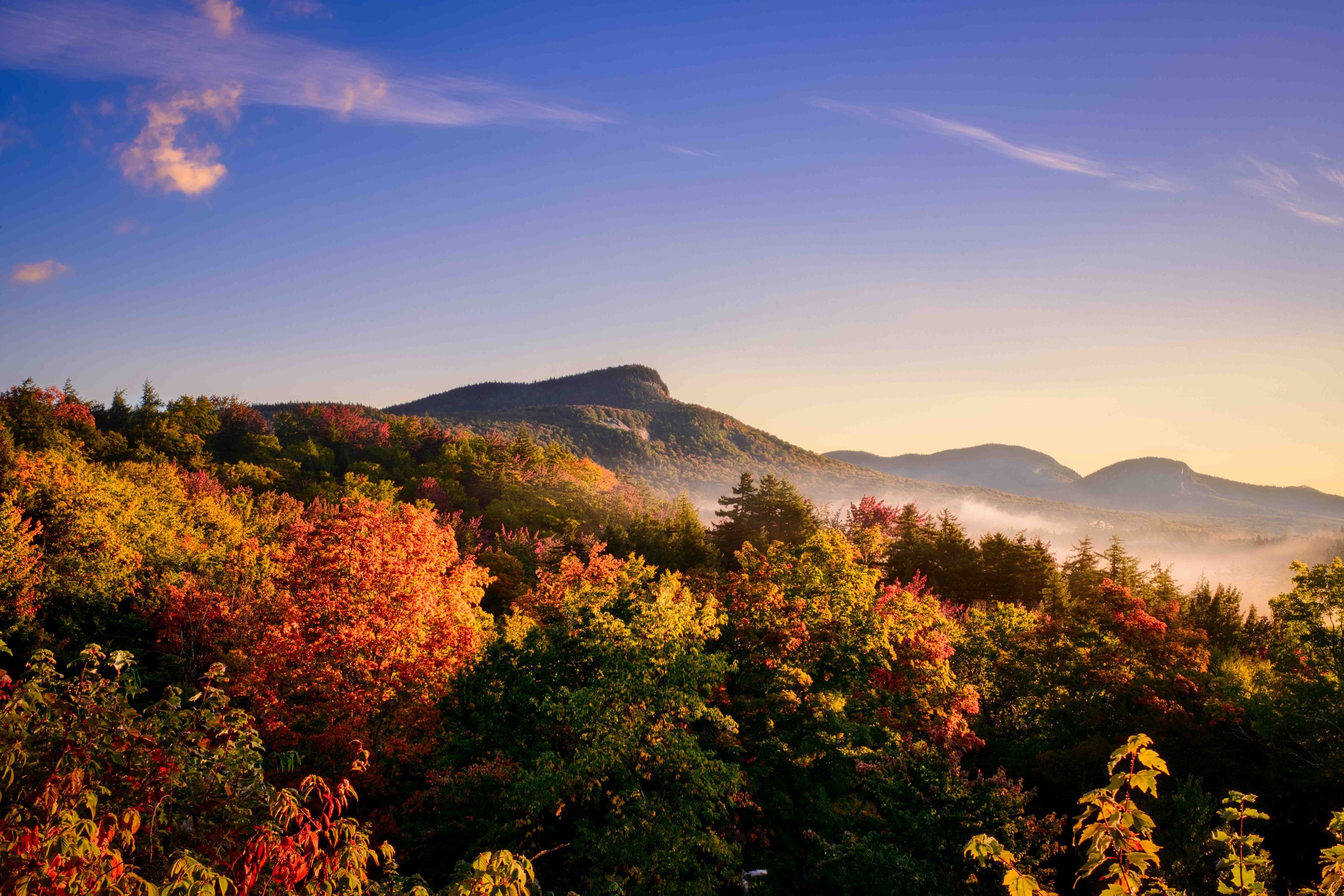
Early morning fog drifts through the valley at the Sugar Hill Vista just after sunrise.
Sugar Hill delivered one of my favorite moments of the trip. Right after sunrise, thin fog hung in the valleys while warm light touched the hills above it. The layers of mist and color made the scene feel almost painted. Fog doesn’t last long, so be there early and ready.
Photo tip: Fog adds mood but fades quickly once the sun warms things up. Arrive before sunrise and shoot for the first 20 to 30 minutes after the sun clears the horizon.
The Basin
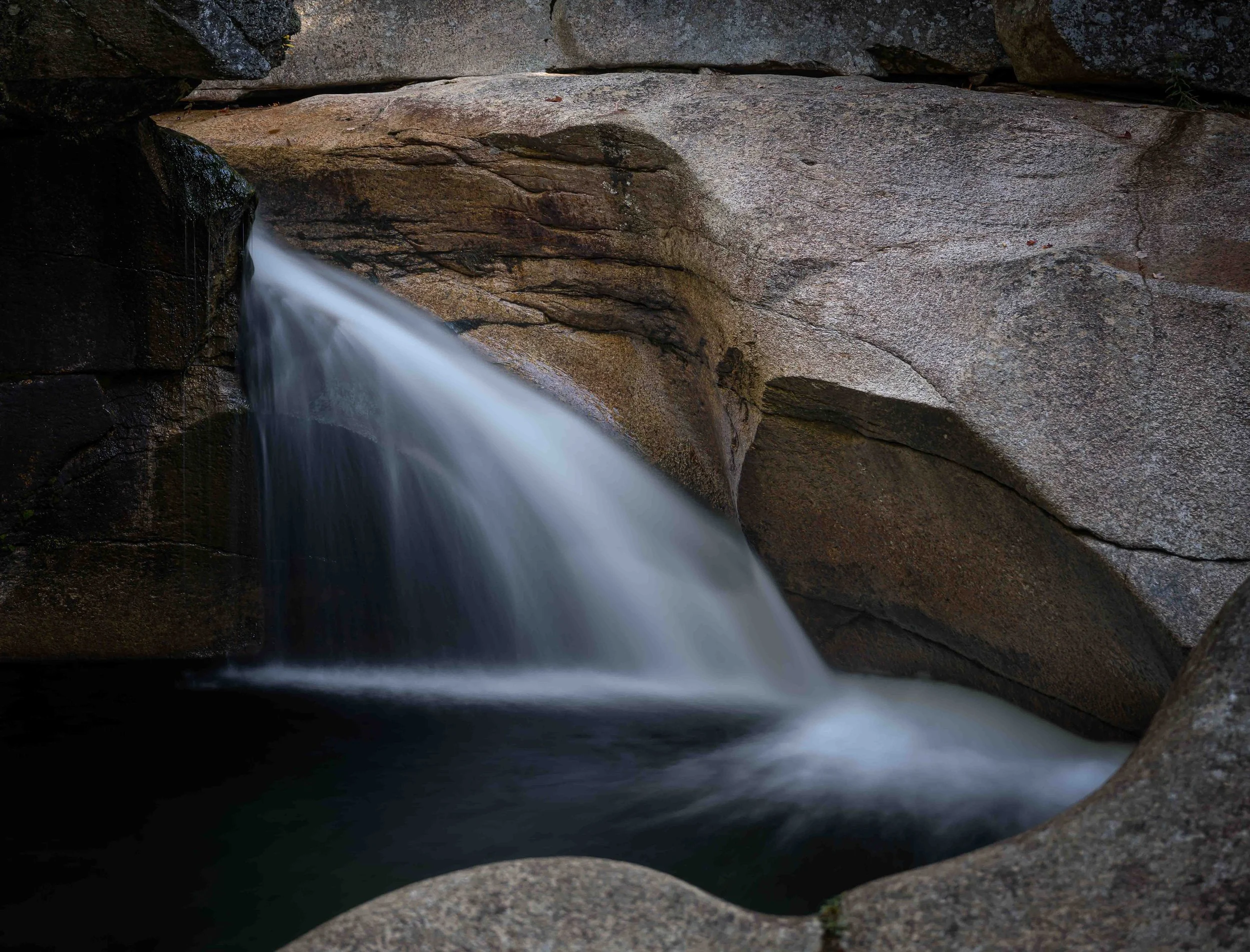
Silky water swirls through the glacier-carved granite at The Basin in Franconia Notch.
The Basin, in Franconia Notch, is a large granite pothole carved over thousands of years by swirling water and stones. The polished rock gives you plenty of compositions to play with.
Photo tip: Use a slow shutter speed to blur the water. Try a shutter speed of about a half second to several seconds. The moving water turns silky and smooth, which contrasts nicely with the hard granite. A tripod keeps everything else sharp.
Glen Ellis Falls
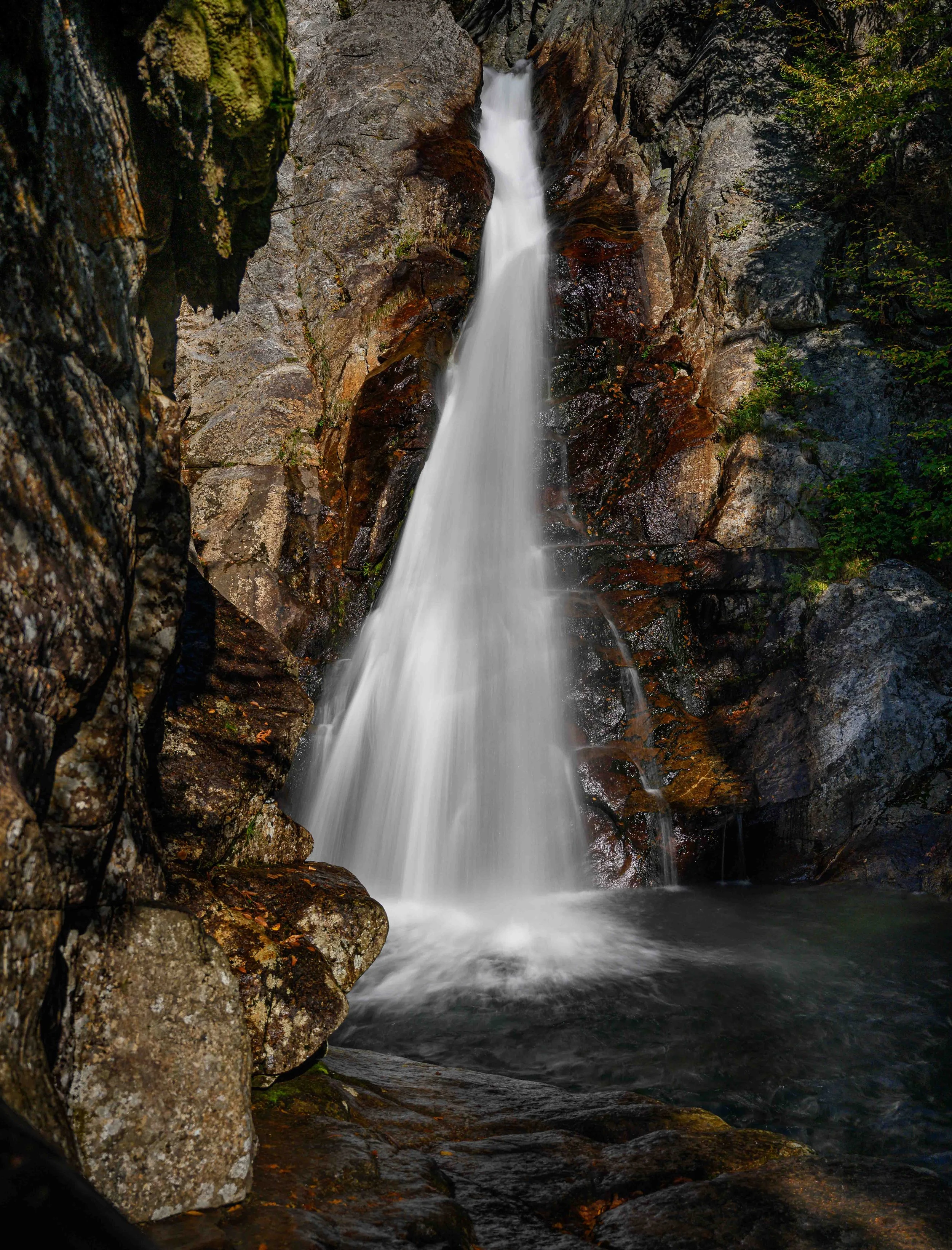
Glen Ellis Falls tumbles through a gorge framed by early autumn color.
Glen Ellis is a beautiful single drop of about 64 feet, reached by a short walk and a trail through the woods. It’s powerful, and the surrounding trees add color even early in the season.
Photo tip: Use a neutral density (ND) filter in bright light. An ND filter is like sunglasses for your lens. It cuts the light so you can use a slower shutter speed, even in daylight, and still get that soft, flowing water without overexposing your image.
Jackson Falls
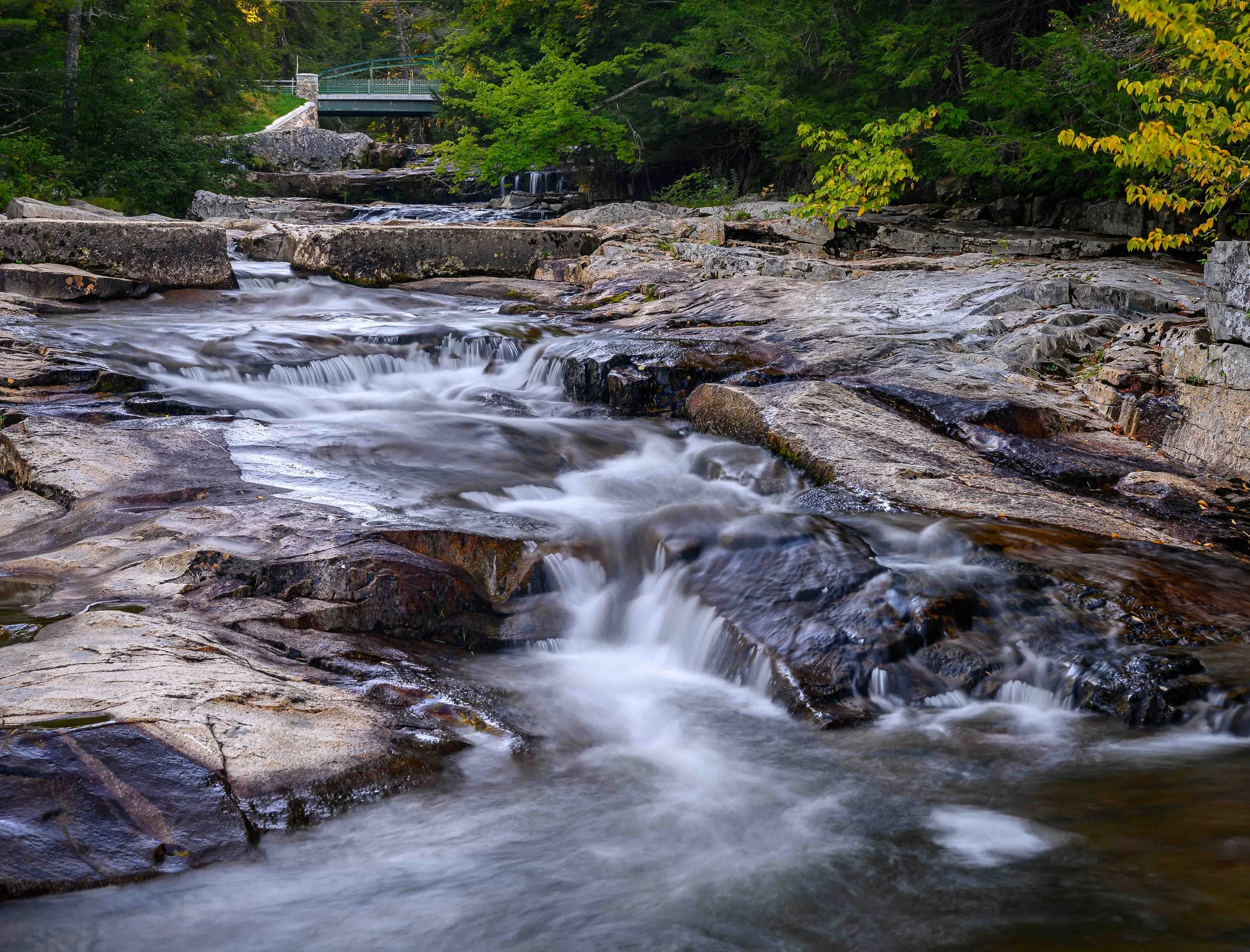
Water cascades gracefully over the rocks at Jackson Falls.
Jackson Falls is a graceful cascade that steps down over rocks, and it’s easy to spend a long time exploring different angles. The water, the mossy stones, and a few leaves turning around the edges make it a very photogenic stop.
Photo tip: Look for compositions that lead the eye through the scene. Use the stream and rocks in the foreground as a path toward the falls.
Sabbaday Falls
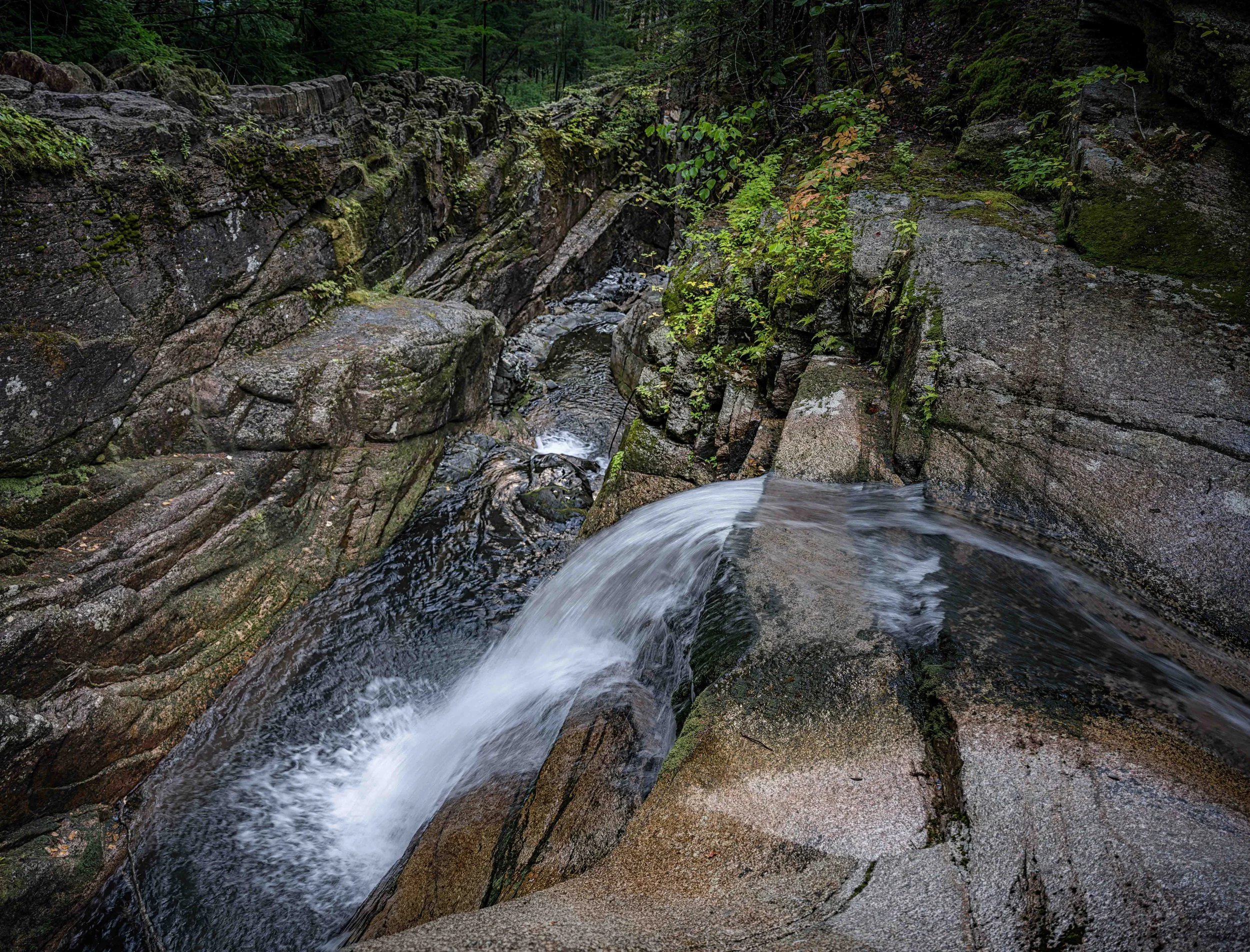
Sabbaday Falls flows through its narrow flume, best enjoyed in the quiet of early morning.
Sabbaday Falls is one of the most beloved stops on the Kancamagus, and it’s a short, easy walk. The water funnels through a narrow flume and drops in stages into a pool, with rock walls all around.
Photo tip: Go very early in the morning. This is a popular spot, and it gets crowded quickly. An early start gives you quiet, uninterrupted time to shoot without people in your frames. The soft light of early morning also helps with the contrast around the water.
Silver Cascade
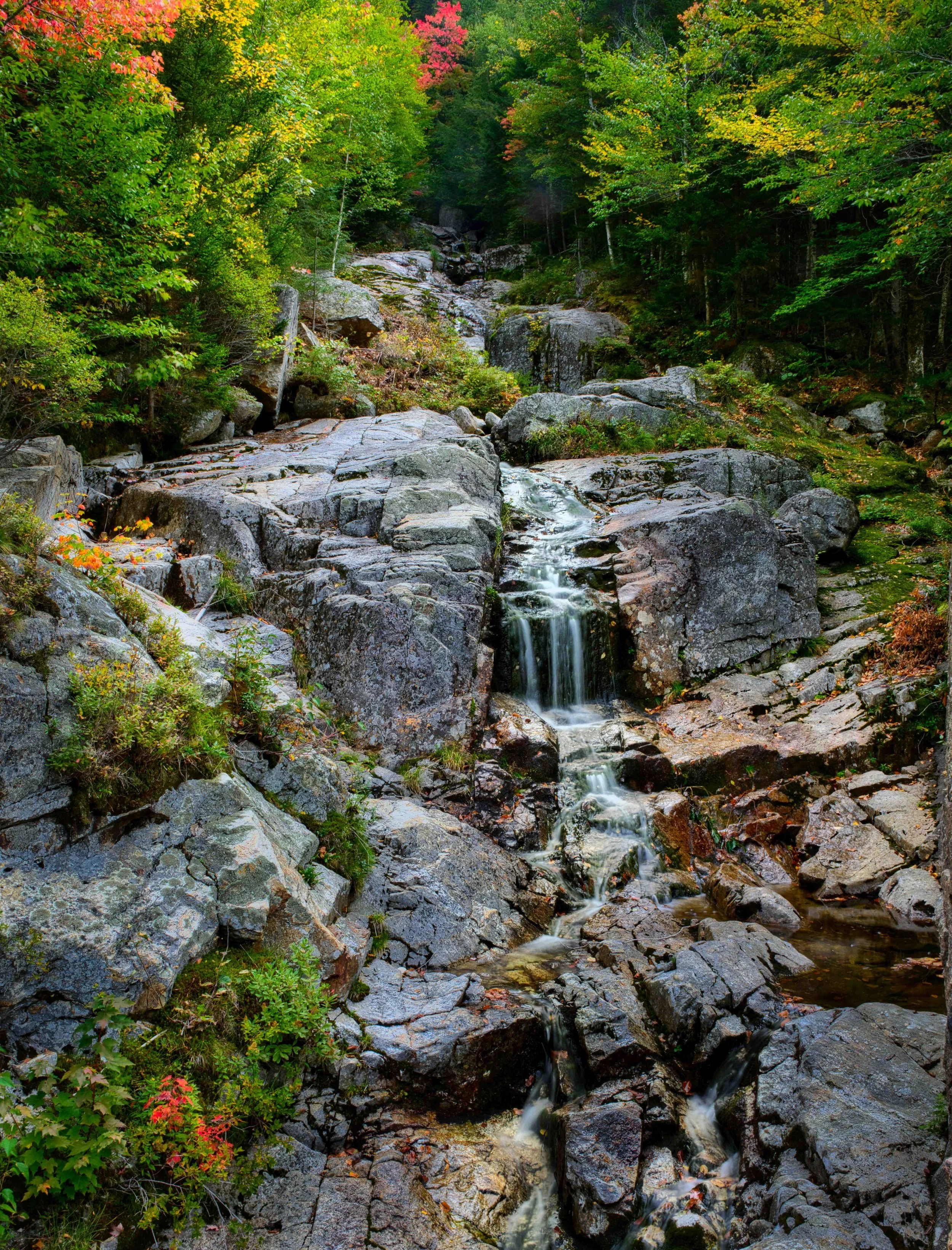
Silver Cascade streams down the granite in Crawford Notch.
Silver Cascade in Crawford Notch drops down the mountainside in a long ribbon, passing under a small bridge along the road. It’s one of the easiest waterfalls to see, and it puts on a show after a good rain. It’s also a nice spot to slow down your shutter and let the water flow.
Photo tip: Pull over safely and look for angles that include trees, rock, and the lines of the cascade. Overcast skies work well here, since they soften the light on the water.
Lincoln Woods
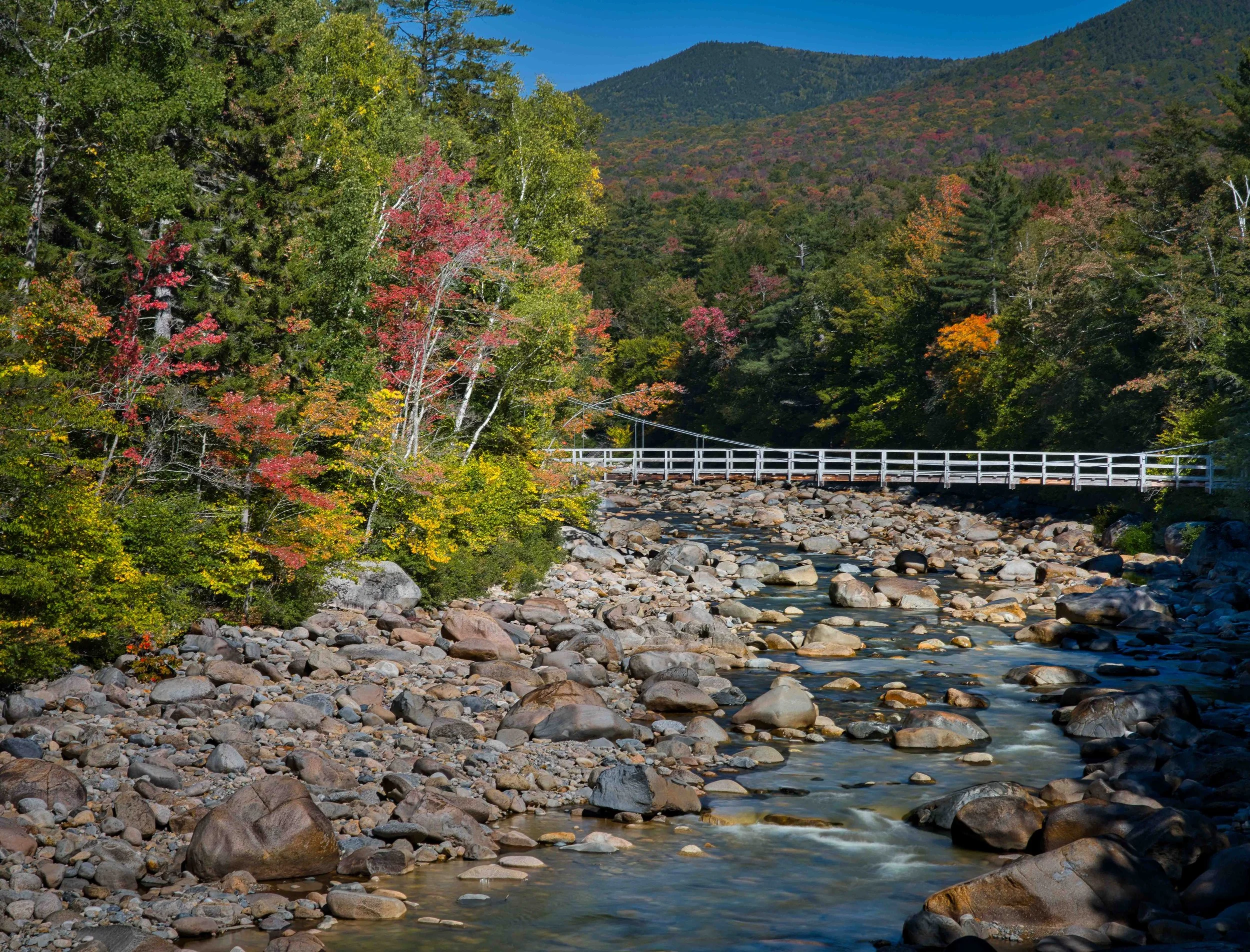
Midday sun lights the early color along the Pemigewasset River at Lincoln Woods.
The Lincoln Woods area along the Pemigewasset River is a lovely place to walk and shoot. The river is broad and rocky, with trees on both banks and mountains beyond.
Photo tip: Shoot in the middle of the day. This is one of the few places where midday works, because you need the sun above the surrounding mountains to light the scene. Earlier or later, shadows can cover much of the river and banks. Once the sun is high, the colors glow and the water sparkles.
Otter Rock
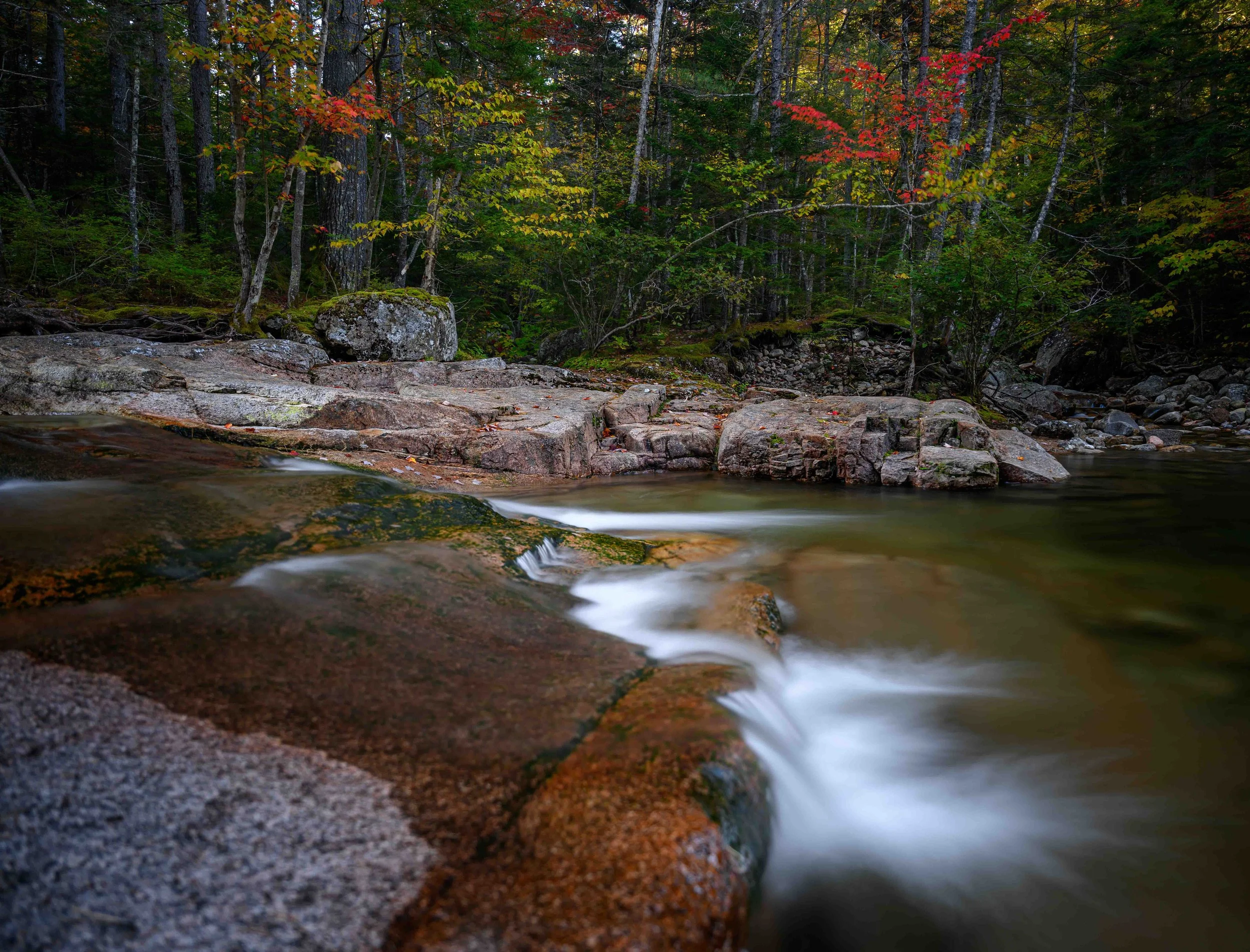
Smooth rocks and flowing water at Otter Rock, with fall color just beginning.
Otter Rock is a fun stop with smooth boulders, flowing water, and plenty of spots to find your own composition. Early color along the river made for lovely scenes, and the rocks give you great foreground elements.
Photo tip: Get low and include some of the rocks in the foreground. Foreground interest gives your photo depth and draws the viewer in.
Willey House Park
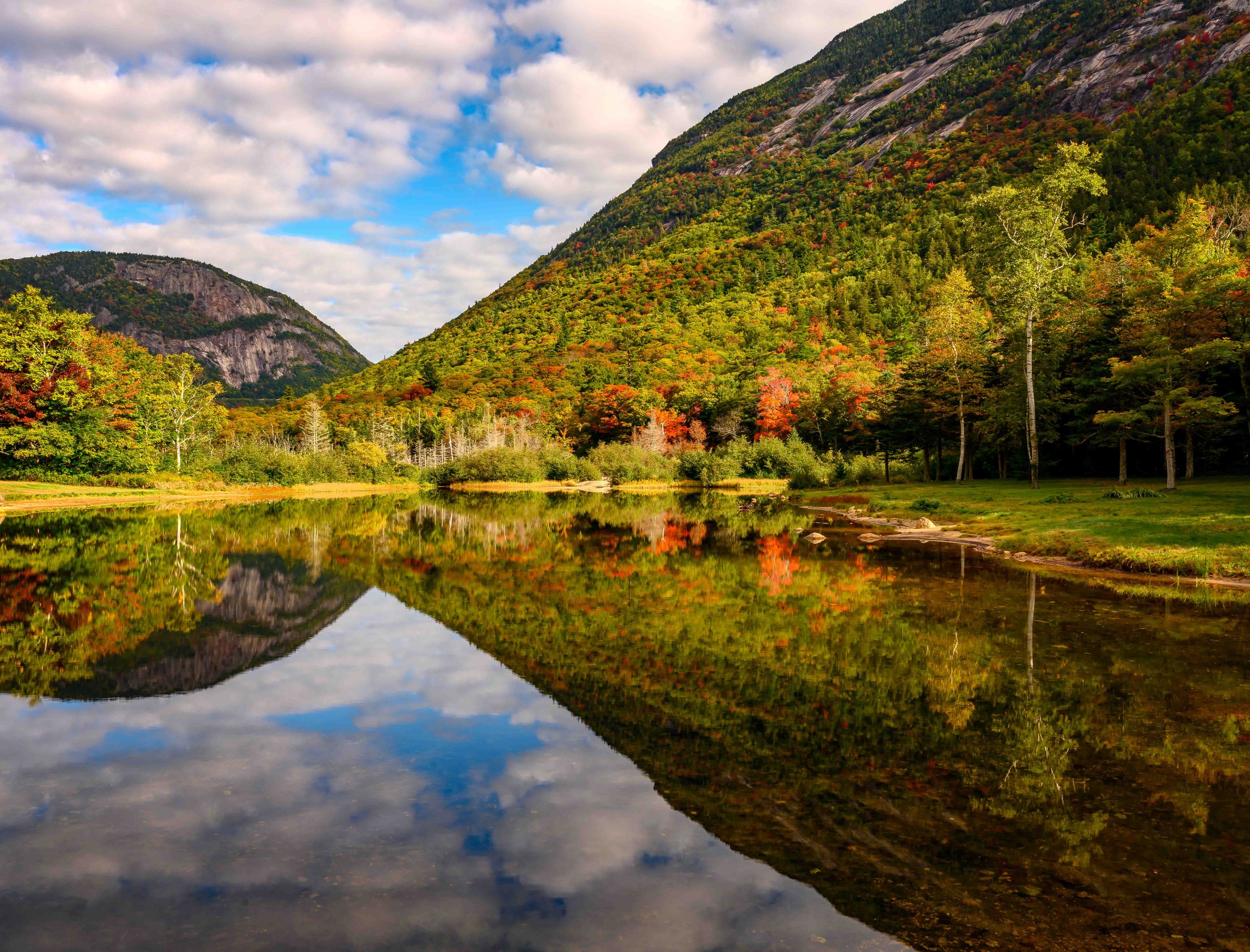
Still morning water mirrors the mountains and fall color at Willey House Park.
This small park in Crawford Notch has a pond that, on a calm morning, becomes a mirror. The surrounding trees and mountains reflect almost perfectly, and early color makes the scene shine. The site is also steeped in history. In 1826, a landslide here took the lives of the Willey family, and their story became part of White Mountain lore.
Photo tip: Look for calm water. Reflections are best when the surface is still, which usually happens in the early morning before the wind picks up. If ripples start, wait a few minutes. The wind often settles.
Mount Washington Resort
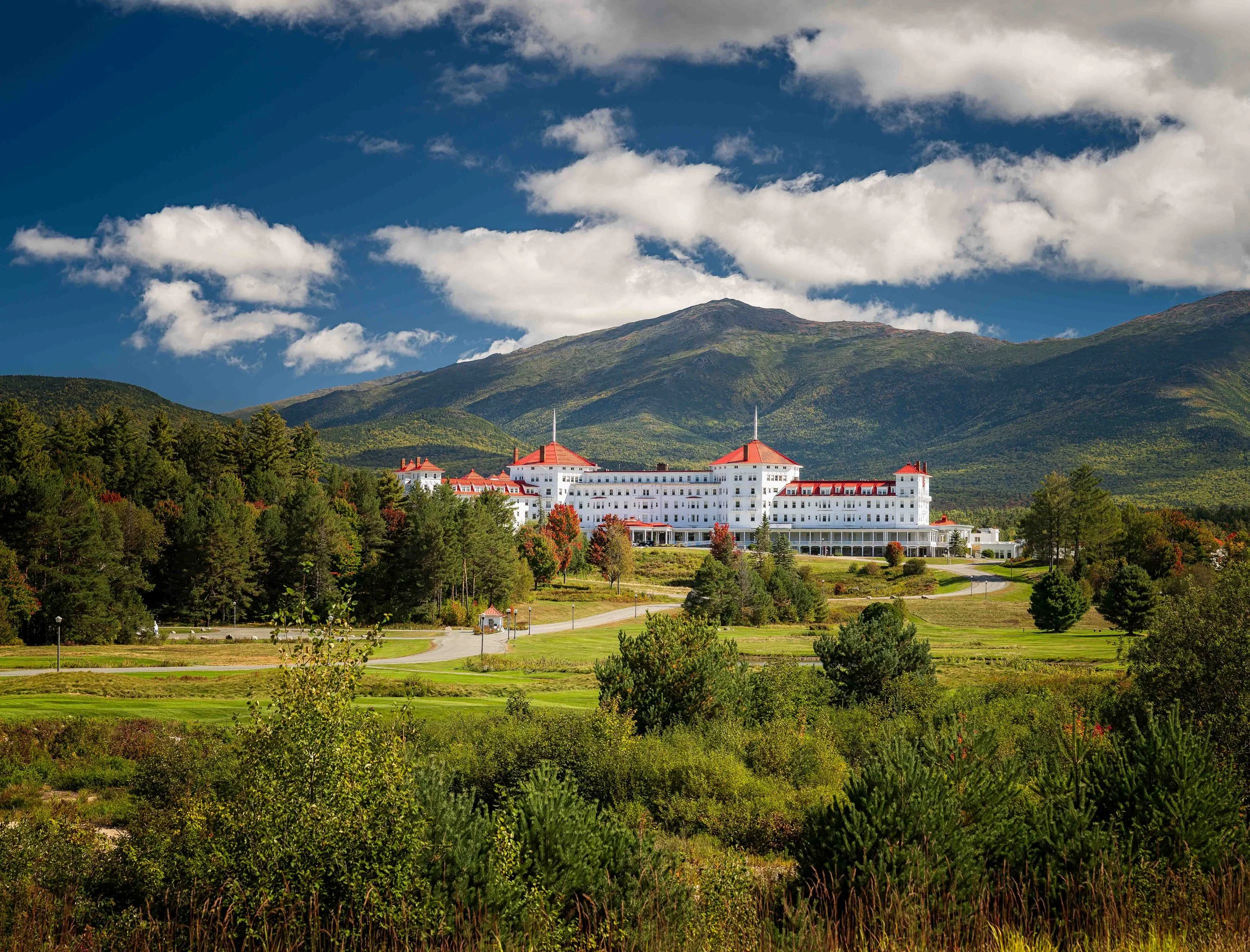
The historic Mount Washington Resort stands beneath the Presidential Range.
The Mount Washington Resort in Bretton Woods is probably the most iconic hotel in the White Mountains. Opened in 1902, its red roof and white facade stand out against the mountains, and in fall the colors around it make a beautiful setting. The hotel is also known for hosting the 1944 Bretton Woods Conference, which shaped the postwar global economy.
Photo tip: Include the surrounding landscape to give the hotel scale. Late afternoon light flatters the building and adds warmth.
Conway Scenic Railroad
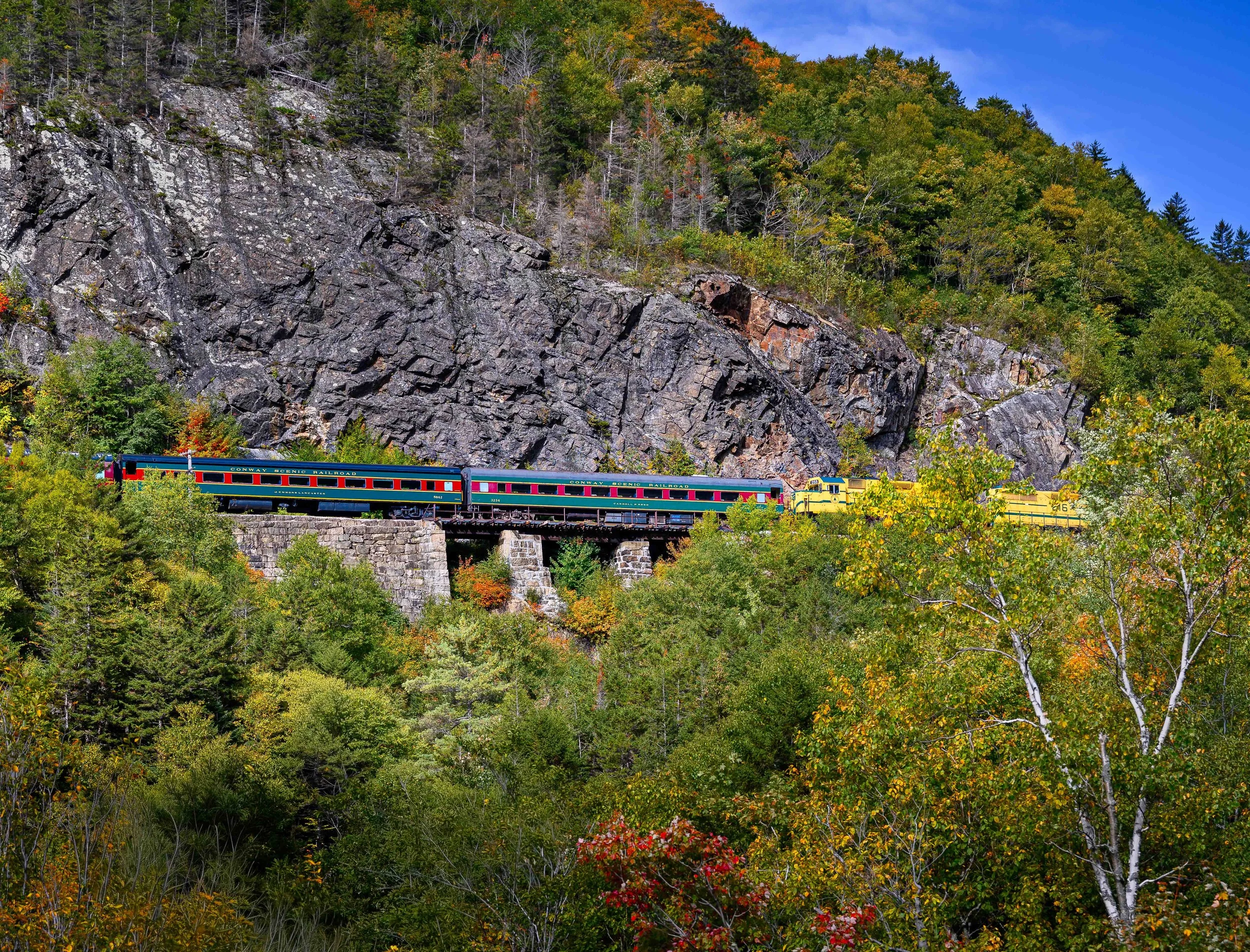
The Conway Scenic Railroad rolls across the bridge through early autumn color.
Catching the Conway Scenic Railroad as it crossed the iconic bridge was a real thrill. It brought together history, color, and motion in one scene, and the train adds a touch of nostalgia that fits fall so well.
Photo tip: Check the train schedule, arrive early to claim your spot, and be ready. The train passes quickly, so use a faster shutter speed to keep it sharp, and take a burst of images as it crosses.
More Photo Tips for White Mountains Foliage
Bring a polarizing filter. It cuts glare on wet leaves and water and makes colors richer.
Shoot on cloudy days too. Overcast skies are great for waterfalls and for saturated color in the woods.
Check the foliage reports. State tourism sites post updates, so you can plan which elevations to visit.
Pack layers and good shoes. Mornings are cold, and rocks near water are slippery.
Arrive early, stay late. The best light is at the edges of the day.
Slow down. Some of my best shots came from sitting quietly in one place and watching how the light changed.
Final Thoughts
If you’ve only visited the White Mountains at peak, I’d encourage you to try the early season. The mix of green, gold, and red, the quiet mornings, and the fog-filled valleys made this one of my most rewarding trips. It exceeded expectations, and I’m already thinking about going back!
Have a favorite White Mountains spot or foliage tip? I’d love to hear about it in the comments.
Comments are always welcome.