
Capturing the Magic of Joshua Tree National Park Through a Photographer’s Lens
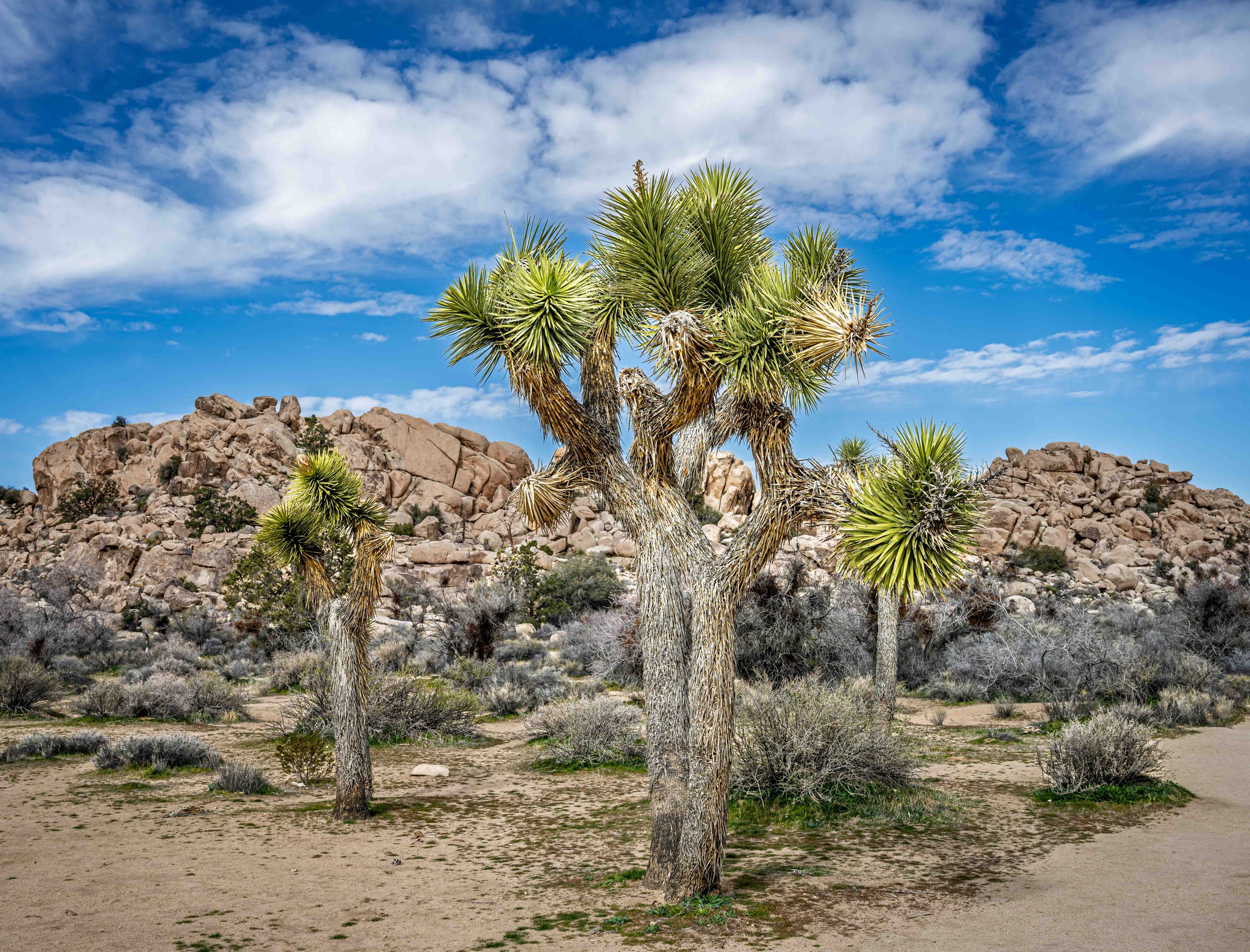
Joshua Trees
A desert landscape where light, texture, and time shape unforgettable images.
Few landscapes in the American Southwest feel as otherworldly as Joshua Tree National Park. Granite boulder piles rise like sculptures from the desert floor. Spiky silhouettes of Joshua trees stretch toward the sky. And at sunrise or sunset, the entire desert can glow in soft shades of gold, lavender, and crimson.
For photographers, Joshua Tree is not simply a destination, it’s a playground of light and texture. Every turn in the road reveals a new composition: twisted trees against pastel skies, cactus gardens shimmering in backlight, and massive rock formations carved by millions of years of erosion.
On a recent visit, I explored several iconic locations within the park. Each offering a unique opportunity to capture the desert’s quiet beauty. From sunrise at sweeping overlooks to golden hour among the cactus fields, Joshua Tree delivers the kind of photographic moments that linger long after the shutter clicks.
But before diving into these locations, it’s worth understanding what makes this landscape so special.
A Brief History of Joshua Tree National Park
The desert landscape of Joshua Tree tells a story that stretches back hundreds of millions of years. The park’s distinctive granite formations were created as underground magma cooled and hardened into rock deep beneath the Earth’s surface. Over time, erosion and groundwater sculpted these formations into the rounded boulders and towering stacks seen today.
The park itself sits at the meeting point of two distinct desert ecosystems:
The Mojave Desert, home to the park’s namesake Joshua trees
The Colorado Desert, which supports a different range of plants and wildlife
This transition zone is part of what makes Joshua Tree such a biologically diverse landscape.
Long before it became a national park, the area was inhabited by Indigenous peoples including the Serrano, Cahuilla, and Chemehuevi tribes, who lived in and traveled through the region for thousands of years.
In the late 1800s, miners and ranchers arrived searching for gold and other resources. Remnants of this era can still be found throughout the park, including historic sites like Keys Ranch.
Joshua Tree was first protected as a national monument in 1936 and later redesignated as a national park in 1994. Today it covers nearly 800,000 acres of protected desert wilderness, making it one of the largest national parks in the contiguous United States.
Why Photographers Love Joshua Tree
There are few places in North America where landscape photography feels as accessible and rewarding as Joshua Tree.
Several elements combine to make it a dream destination:
1. Dramatic Desert Light
With dry air and wide open horizons, sunrise and sunset light can produce extraordinary colors.
2. Sculptural Rock Formations
The park’s granite monoliths and stacked boulder fields offer natural compositions and foreground interest.
3. Unique Plant Life
The spiky silhouettes of Joshua trees and cactus species create distinctive shapes against the sky.
4. Dark Night Skies
Joshua Tree is also known for its exceptional stargazing and astrophotography opportunities thanks to minimal light pollution.
Photographic Highlights in Joshua Tree National Park
During my visit I focused on several locations that capture the essence of Joshua Tree from quiet sunrise overlooks to iconic rock formations.
Sunset at Cap Rock Trail
Cap Rock is one of those places where the desert feels alive in the last moments of daylight.
The short interpretive trail loops through a landscape filled with Joshua trees and massive boulders that glow in warm evening light. As sunset approaches, the granite formations begin to reflect soft oranges and reds, while the Joshua trees cast long shadows across the desert floor.
Photographically, Cap Rock works beautifully because it offers multiple foreground options. Twisting Joshua trees, textured boulders, and desert shrubs provide natural layers that guide the viewer’s eye through the frame.
As the sun dropped behind the mountains, the sky slowly transitioned from warm amber to deep purple. For a few minutes, the desert seemed to hold its breath, a reminder that sometimes the quietest moments create the most powerful images.
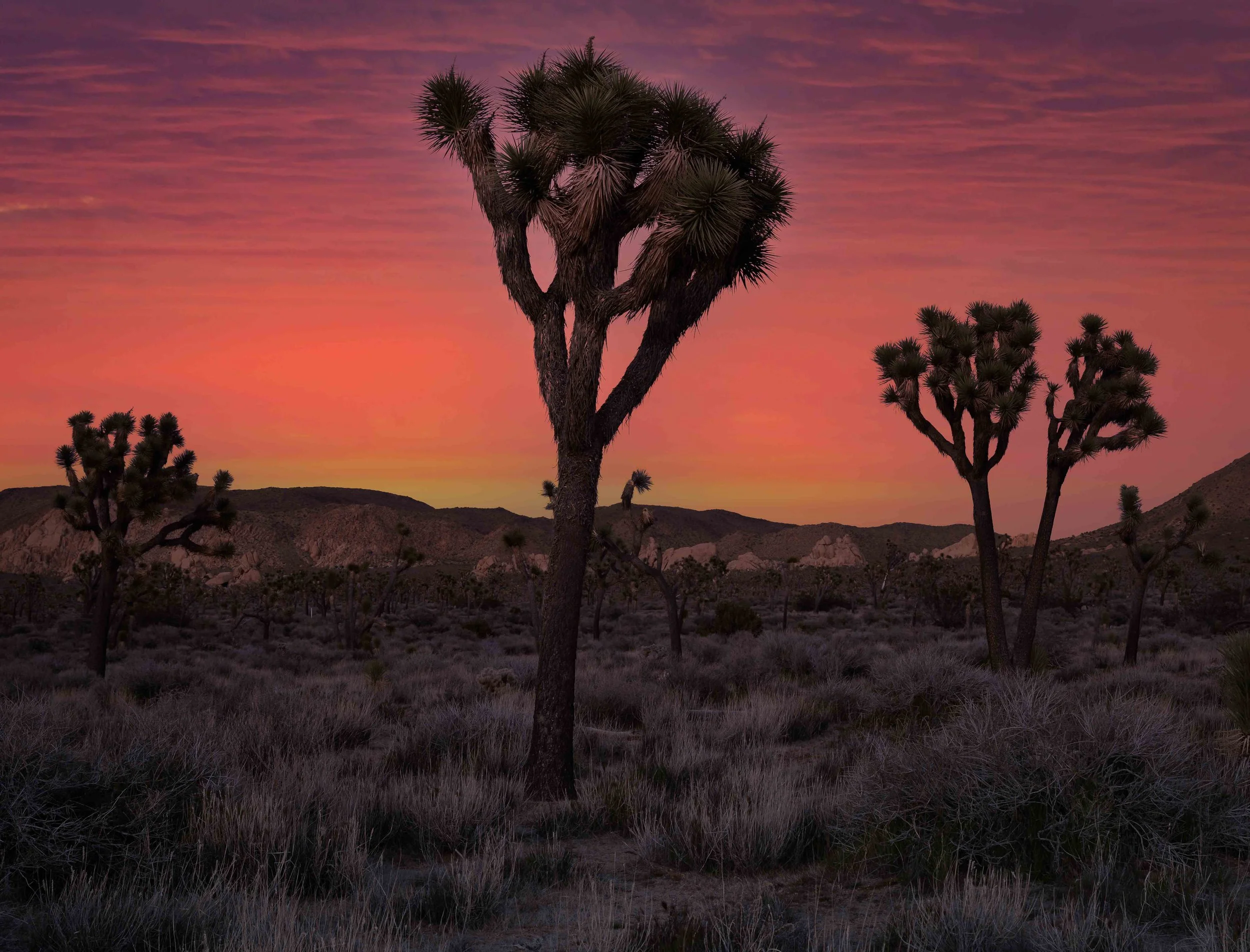
Joshua trees and granite boulders catch the last light of sunset along the Cap Rock Trail.
Sunrise at Keys View
If sunset reveals the textures of Joshua Tree, sunrise reveals its scale.
Keys View sits high in the Little San Bernardino Mountains and offers one of the most expansive viewpoints in the park.
From this overlook you can see the vast Coachella Valley, the distant Salton Sea, and even traces of the San Andreas Fault cutting across the desert floor.
Arriving before dawn, the landscape below was still wrapped in darkness. Slowly, a thin band of light began to form along the horizon.
When the sun finally appeared, the entire valley ignited in soft golden tones. The mountains cast long shadows across the desert basin, adding depth and dimension to the scene.
Photographically, Keys View is less about foreground and more about scale—capturing the immense desert stretching to the horizon.
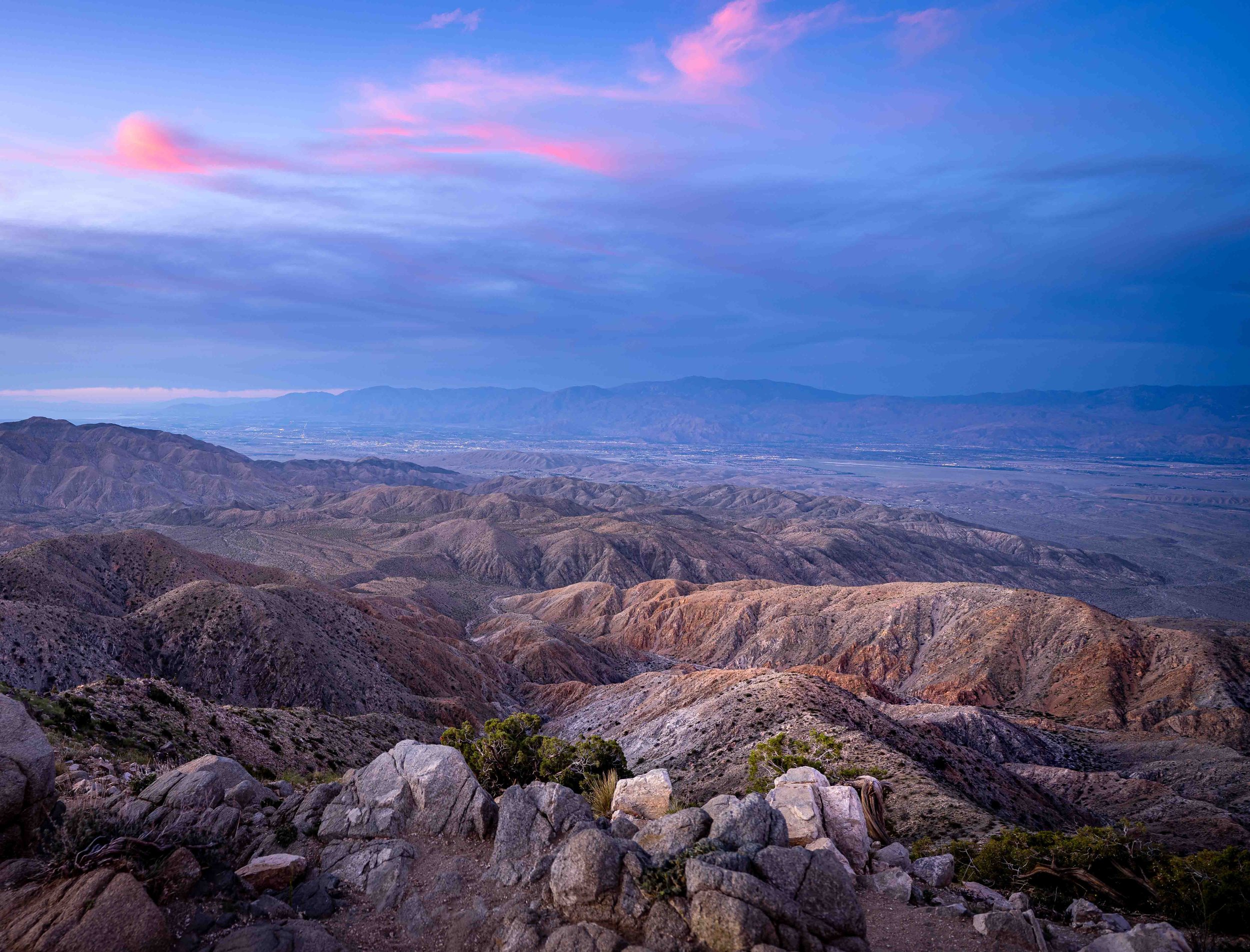
First light illuminates the Coachella Valley as seen from Keys View.
Cholla Cactus Garden and the “Teddy Bear” Cactus
One of the most unusual and photogenic places in the park is the Cholla Cactus Garden.
Located in the Pinto Basin, this small area contains thousands of densely clustered cholla cactus, creating what appears to be a shimmering field of spines.
Among the most famous varieties here is the “teddy bear cholla.” Despite its soft, fuzzy appearance, the cactus is anything but cuddly.
The plant’s spines are extremely sharp, and its segments can detach easily and attach to animals or hikers that brush too close giving rise to the nickname “jumping cholla.”
From a photographic perspective, the magic happens when the low sun backlights the cactus. Each spine glows with a golden halo, transforming the desert landscape into something almost surreal.
Walking the short loop trail through the garden feels like stepping into another world—one filled with texture, light, and delicate desert geometry.
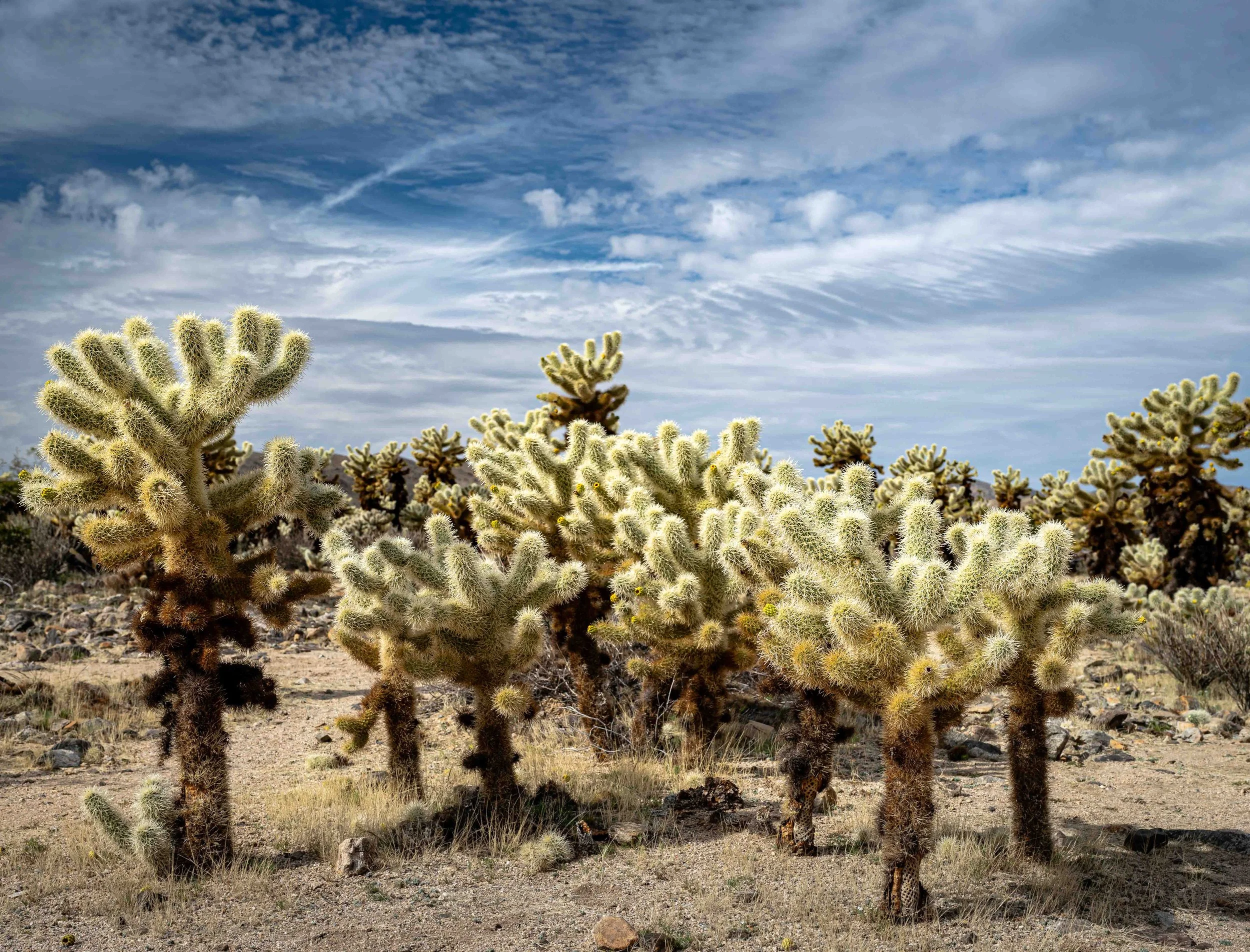
Backlit teddy bear cholla cactus glow in the late afternoon light at the Cholla Cactus Garden.
Arch Rock and a Starburst of Sunlight
Among Joshua Tree’s many rock formations, Arch Rock stands out as one of the most photogenic.
The formation is a natural granite arch perched atop a pile of massive boulders. A short walk from White Tank Campground leads to the arch, which rises roughly thirty feet above the surrounding rock.
The beauty of Arch Rock is how it frames the sky. Depending on the angle of light, the opening in the arch can create dramatic compositions.
In my case, aligned with the edge of the arch with the sun, creating a natural starburst effect as light filtered through.
Moments like this often last only seconds but when they happen, they can transform an already beautiful scene into something unforgettable.
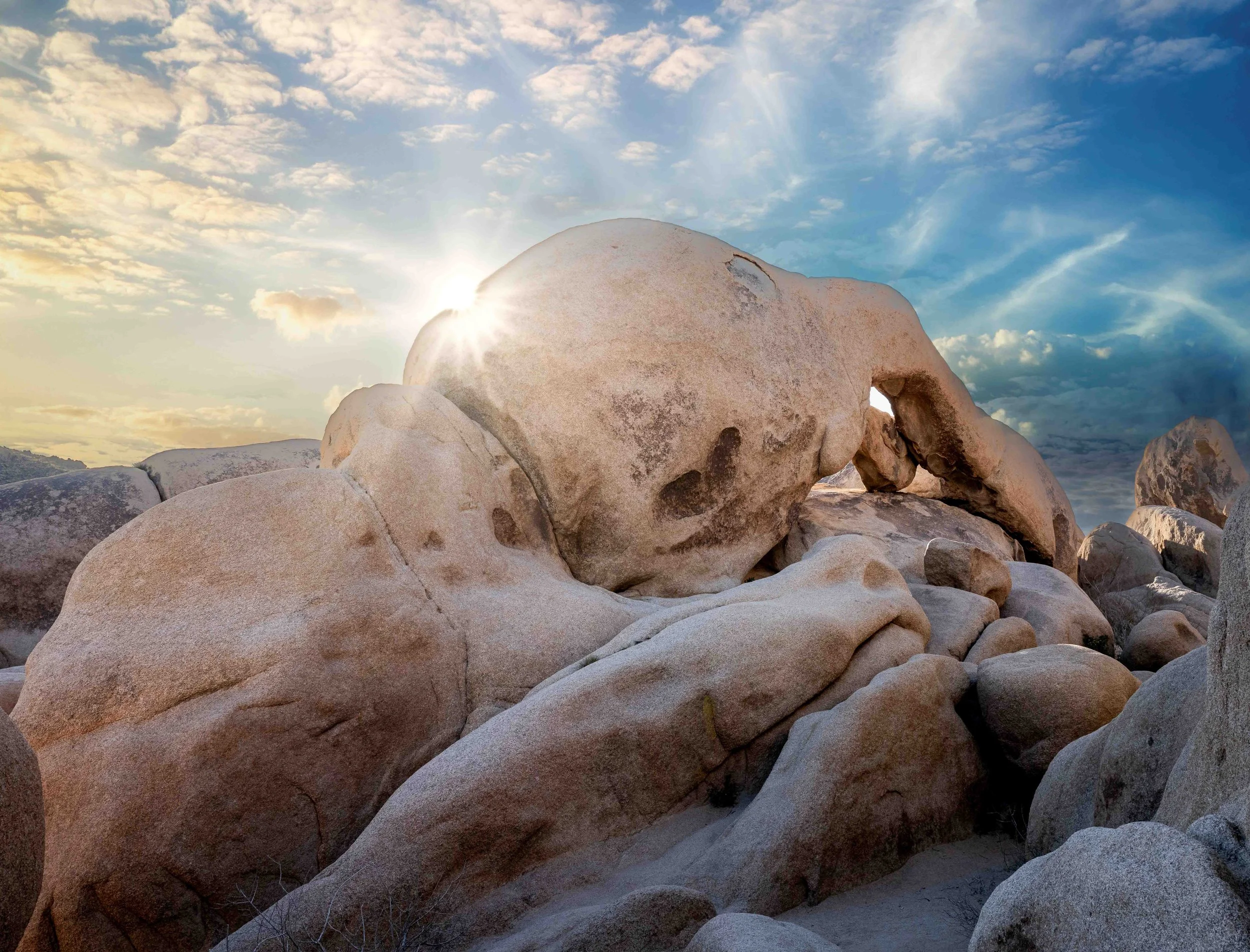
A sunlight starburst at Arch Rock.
Skull Rock in Black and White
Some of the most memorable photographs happen when conditions are less than ideal.
On a day when clouds muted the desert colors, I stopped at Skull Rock.
Located right beside the park road, this massive granite boulder has been sculpted by erosion into a shape that resembles a human skull.
Normally the rock is photographed in warm sunset light. But under gray skies, the scene lacked color and contrast.
Instead of fighting the conditions, I leaned into them, converting the image to black and white.
Without color, the textures of the granite and the hollow “eye sockets” of the rock became more dramatic. The stormy sky added mood and atmosphere, transforming a simple roadside stop into a striking monochrome image.
Sometimes bad weather creates the most interesting photographs.
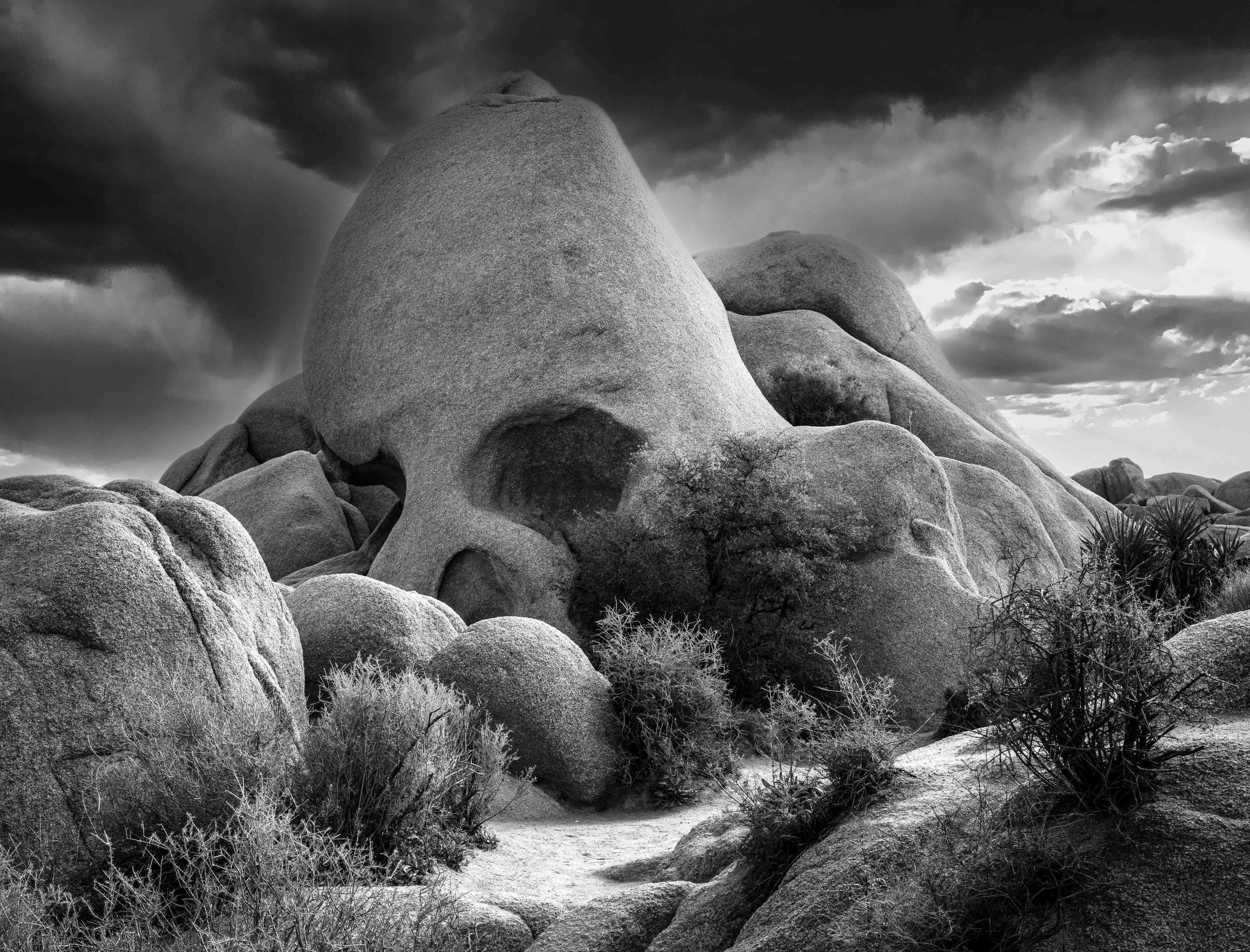
Black and white interpretation of Skull Rock in Joshua Tree National Park under stormy skies.
Interesting Facts About Joshua Tree National Park
Here are a few lesser-known facts that make Joshua Tree even more fascinating:
Joshua trees are not actually trees.
They are a species of yucca plant native to the Mojave Desert.
The park sits where two deserts meet.
The Mojave Desert (higher elevation) and Colorado Desert (lower elevation) create unique ecosystems.
Rock climbing is extremely popular here.
The park contains thousands of climbing routes across hundreds of formations.
Some rocks are incredibly ancient.
Certain formations within the park contain rock more than 1.7 billion years old.
The night sky is spectacular.
Joshua Tree is internationally recognized for its dark skies, making it a favorite destination for astrophotography.
Photography Tips for Visiting Joshua Tree
While Joshua Tree is photogenic almost everywhere, a few tips can help make the most of your visit:
Arrive early
Sunrise often provides the most dramatic light and fewer crowds.
Use foreground elements
Joshua trees, rocks, and cactus help add depth to compositions.
Explore beyond the roadside
Many of the best compositions are just a short walk off the road.
Stay after sunset
The desert often glows with color long after the sun disappears.
Respect the desert
Stay on designated trails, especially around fragile cactus and plants.
Final Thoughts
Joshua Tree National Park is one of those places that quietly grows on you.
At first glance, the desert can seem sparse and harsh. But the longer you spend exploring, the more detail emerges. Patterns in the rocks, silhouettes of twisted trees, and subtle colors that shift with the changing light.
For photographers, it’s a landscape that rewards patience. The most memorable images often come from simply slowing down, watching the light, and letting the desert reveal itself.
And when it does, Joshua Tree offers something rare: a place where geology, light, and time combine to create a landscape unlike anywhere else on Earth.
Comments are always welcome.
You can see more images from Joshua Tree National Park on my website at the following link.