
Yellowstone National Park: A Photographer’s Journey Through America’s Wild Heart
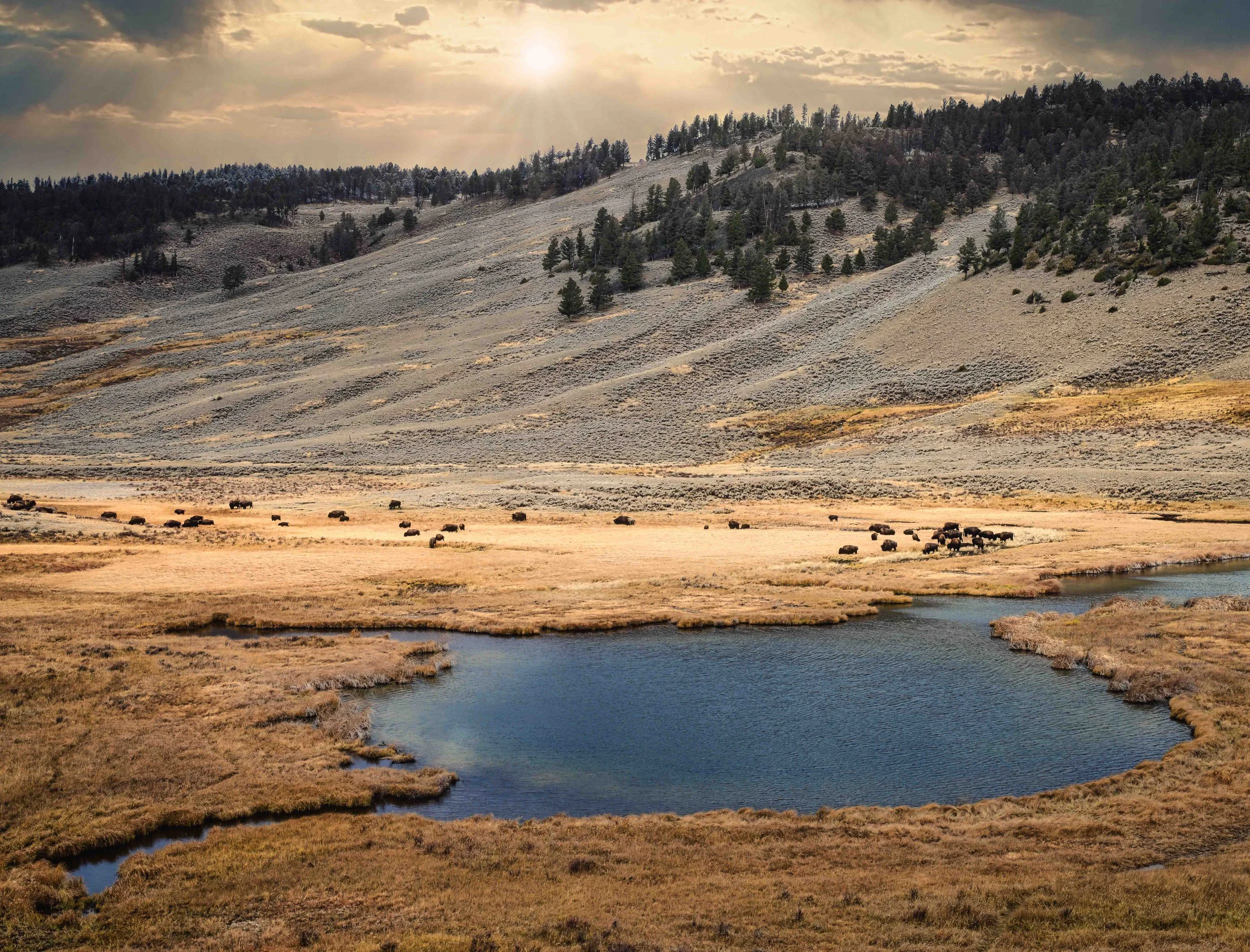
Blacktail Pond
Yellowstone National Park is more than a destination—it’s a living, breathing reminder of what the American landscape looked like long before highways, cities, and schedules shaped our days. For a photographer, Yellowstone offers something increasingly rare: true unpredictability. Steam drifts across valleys without warning, wildlife appears when you least expect it, and light transforms familiar scenes into something entirely new in a matter of minutes.
This is a place where patience matters more than gear, where observation outweighs technical mastery, and where every visit feels different—even if you return year after year. From geothermal wonders and broad river valleys to snow-covered peaks and roaming wildlife, Yellowstone is both a challenge and a gift to anyone who points a camera in its direction.
In this blog, I’ll share a photographer’s perspective on Yellowstone National Park—its history, fascinating facts, and some of the most compelling scenes I’ve photographed, including wildlife encounters, Mammoth Terraces at sunrise, Swan Lake’s layered landscape, Roaring Mountain after a snowstorm, the Madison River’s early-morning S-curve, and the iconic Roosevelt Arch.
A Brief History of Yellowstone National Park
Established in 1872, Yellowstone National Park holds the distinction of being the first national park in the world. At a time when much of the American West was still being explored, Congress made a bold and unprecedented decision: to protect over two million acres of wilderness for the benefit and enjoyment of future generations.
Early expeditions—most notably the Hayden Geological Survey of 1871—documented Yellowstone’s geysers, hot springs, waterfalls, and wildlife through paintings, photographs, and written accounts. These visuals played a crucial role in convincing lawmakers that this landscape was worth preserving rather than exploiting.
President Ulysses S. Grant signed the Yellowstone National Park Protection Act into law, setting a global precedent for conservation. Today, Yellowstone spans parts of Wyoming, Montana, and Idaho, safeguarding geothermal features found nowhere else on Earth and one of the largest intact ecosystems in the lower 48 states.
For photographers, this history adds depth to every frame. When you photograph Yellowstone, you’re not just capturing scenery—you’re participating in a legacy of preservation that began over 150 years ago.
Interesting Facts About Yellowstone National Park
Yellowstone is full of surprises, both visible and hidden beneath the surface:
Yellowstone sits atop a volcanic caldera, often referred to as a “supervolcano.”
The park contains more than half of the world’s geysers.
Over 1,000 miles of hiking trails weave through the park.
Yellowstone is home to 67 species of mammals, including wolves, grizzly bears, and bison.
Bison in Yellowstone form the largest free-roaming herd in the United States.
Elevations range from about 5,300 to over 11,000 feet, creating diverse habitats and dramatic weather shifts.
These facts aren’t just trivia—they influence how, when, and where you photograph. Weather changes quickly, wildlife movement is unpredictable, and geothermal activity can transform scenes overnight.
Photographing Yellowstone’s Wildlife
Yellowstone’s wildlife is one of its greatest draws, and for photographers, it often becomes the emotional centerpiece of a trip. Seeing animals roam freely—unfenced, untamed, and behaving naturally—is a powerful experience.
Bison: The Icons of Yellowstone
Bison are everywhere, and yet they never feel ordinary. Whether silhouetted against morning fog or dusted with fresh snow, they embody the spirit of the American West. Photographing bison teaches patience; they move slowly until suddenly they don’t.
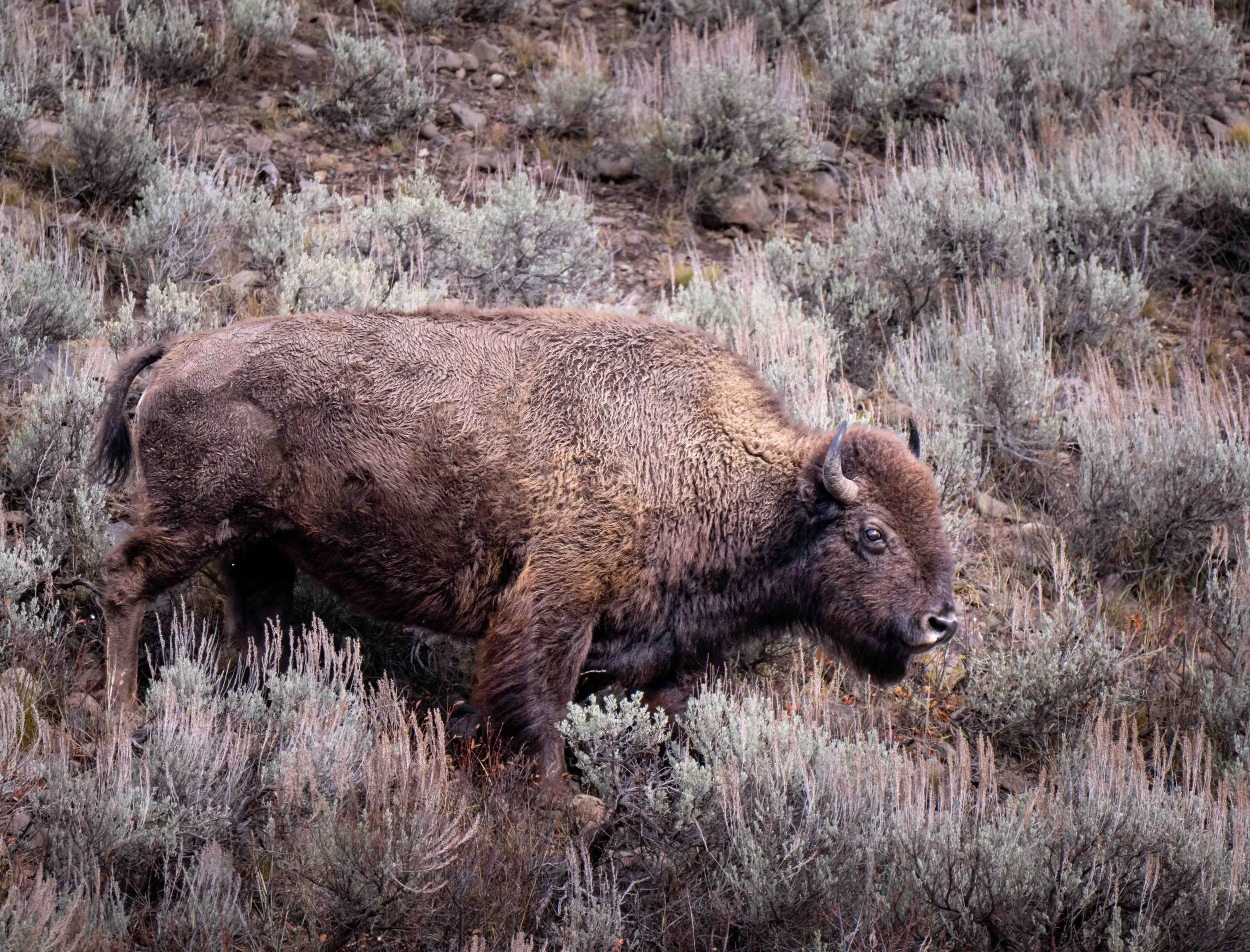
A bison moves through the field, a timeless symbol of Yellowstone’s wild resilience.
Wolves: Ghosts of the Landscape
Wolves are elusive and often distant, but spotting one through morning mist or across an open valley is unforgettable. Even when they’re too far for frame-filling shots, including them in the landscape tells a deeper story.
Elk, Deer, and Pronghorn
Autumn brings rutting season, while spring introduces newborn calves. These transitional moments add narrative depth and emotion to wildlife photography.
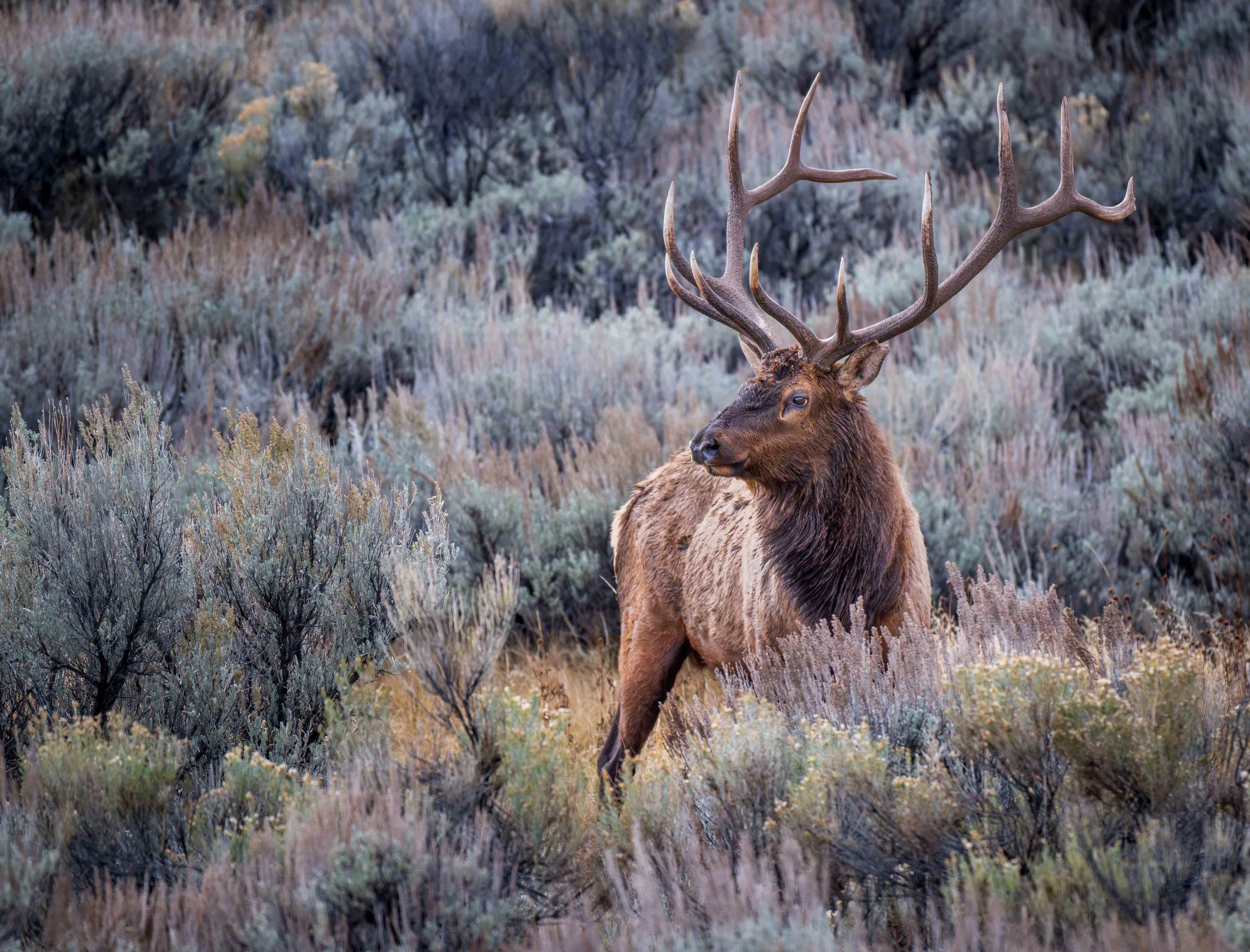
A bull elk pauses during the autumn rut, its antlers catching the evening light against Yellowstone’s wide-open landscape.
Bears: Moments of Respect and Distance
Grizzly and black bears command attention and respect. Photographing bears in Yellowstone is about observation, distance, and letting the moment unfold without interference.
For wildlife photography here, storytelling matters more than perfection. A slightly soft image that captures behavior, mood, or environment often resonates more than a perfectly sharp portrait.
Mammoth Hot Springs Terraces at Sunrise
Mammoth Hot Springs is unlike anywhere else in Yellowstone—and sunrise is when it feels most alive.
The terraces are formed by travertine, a type of limestone deposited by hot water rising from underground. As the sun climbs over the horizon, warm light catches the textured surfaces, revealing layers of white, cream, and subtle gold.
Steam drifting through the terraces adds an ethereal quality, softening contrast and simplifying compositions. From a photographer’s perspective, Mammoth at sunrise is less about grand vistas and more about shapes, patterns, and light.
Every visit feels different. Water flow changes constantly, meaning the terraces themselves evolve over time. Photographing Mammoth is like photographing a living sculpture—never static, never finished.
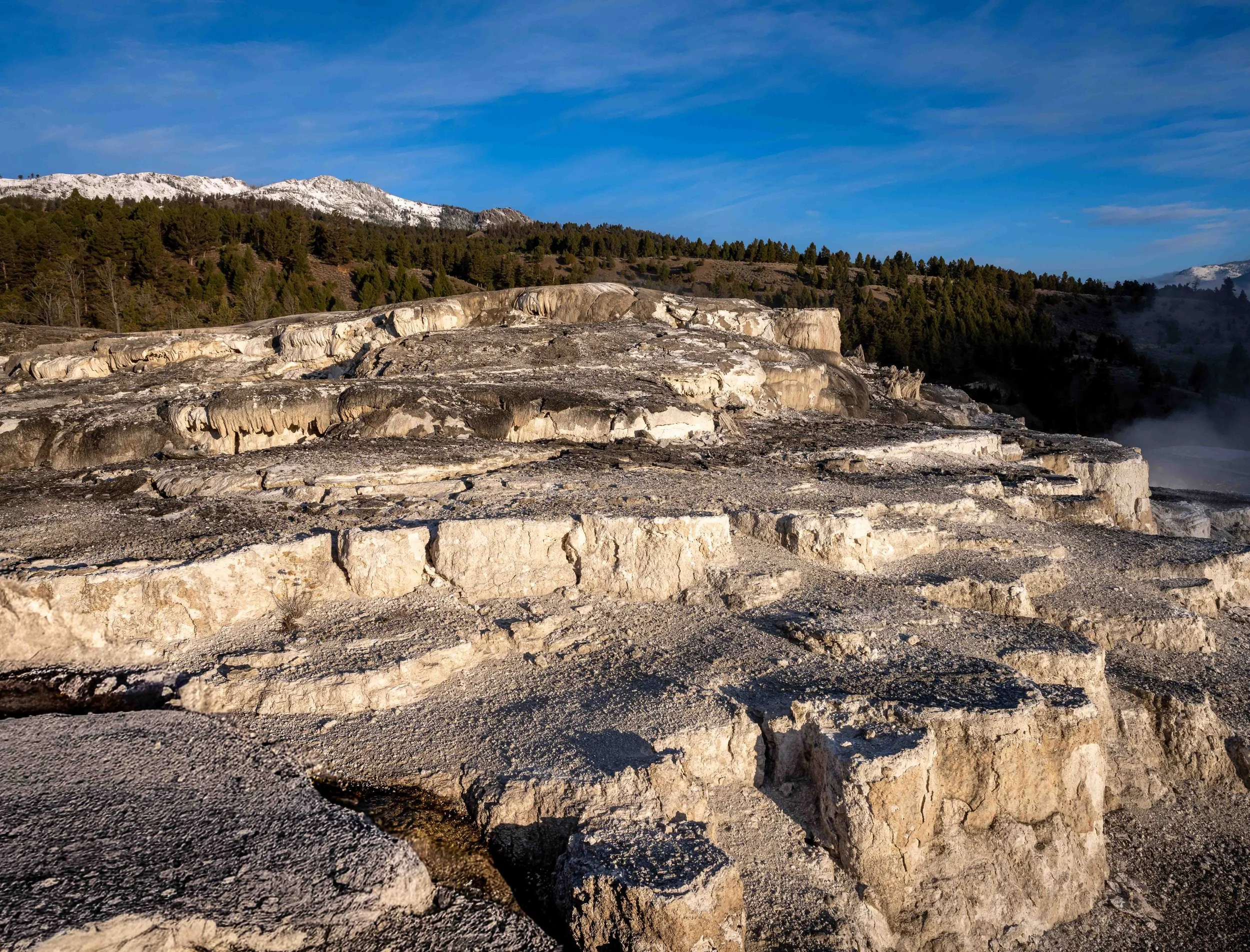
First light illuminates the ever-changing travertine terraces at Mammoth Hot Springs.
Swan Lake: A Study in Layers and Balance
Swan Lake is a quiet, understated location that rewards careful composition. What makes it special is its natural layering:
Foreground: Calm water reflecting sky and shoreline
Midground: Sparse trees and grasses
Background: Snow-capped mountains rising in clean contrast
This scene works beautifully in early morning when winds are minimal and reflections are strongest. The simplicity of the landscape invites restraint—less is more here.
From a photographer’s perspective, Swan Lake is about balance. Aligning elements carefully creates a sense of harmony, while soft light enhances mood rather than overpowering the scene.
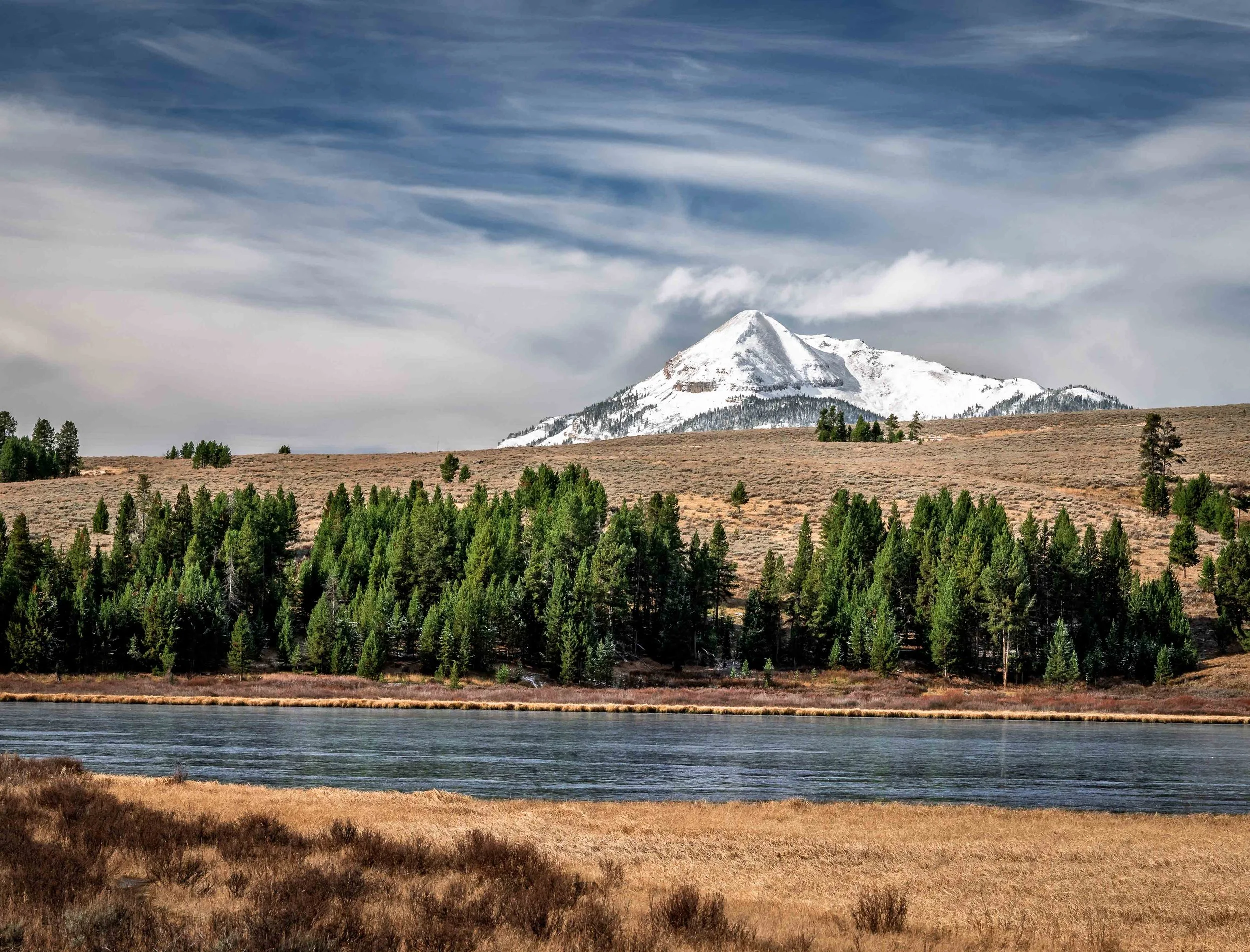
Layered landscapes at Swan Lake—water, trees, and snow-capped peaks in quiet balance.
Roaring Mountain After a Snowstorm
Roaring Mountain is raw, dramatic, and often overlooked. Covered in steaming fumaroles, the mountainside seems alive—especially after a fresh snowfall.
Snow transforms the scene, adding contrast and texture. Dark rock and steaming vents break through white snowfields, creating striking visual tension. Steam rises into cold air, twisting and dissipating unpredictably.
Photographing Roaring Mountain after a snowstorm feels elemental. There’s no need for complexity—this is a place where mood carries the image. Overcast skies often work in your favor, emphasizing texture and minimizing harsh shadows.
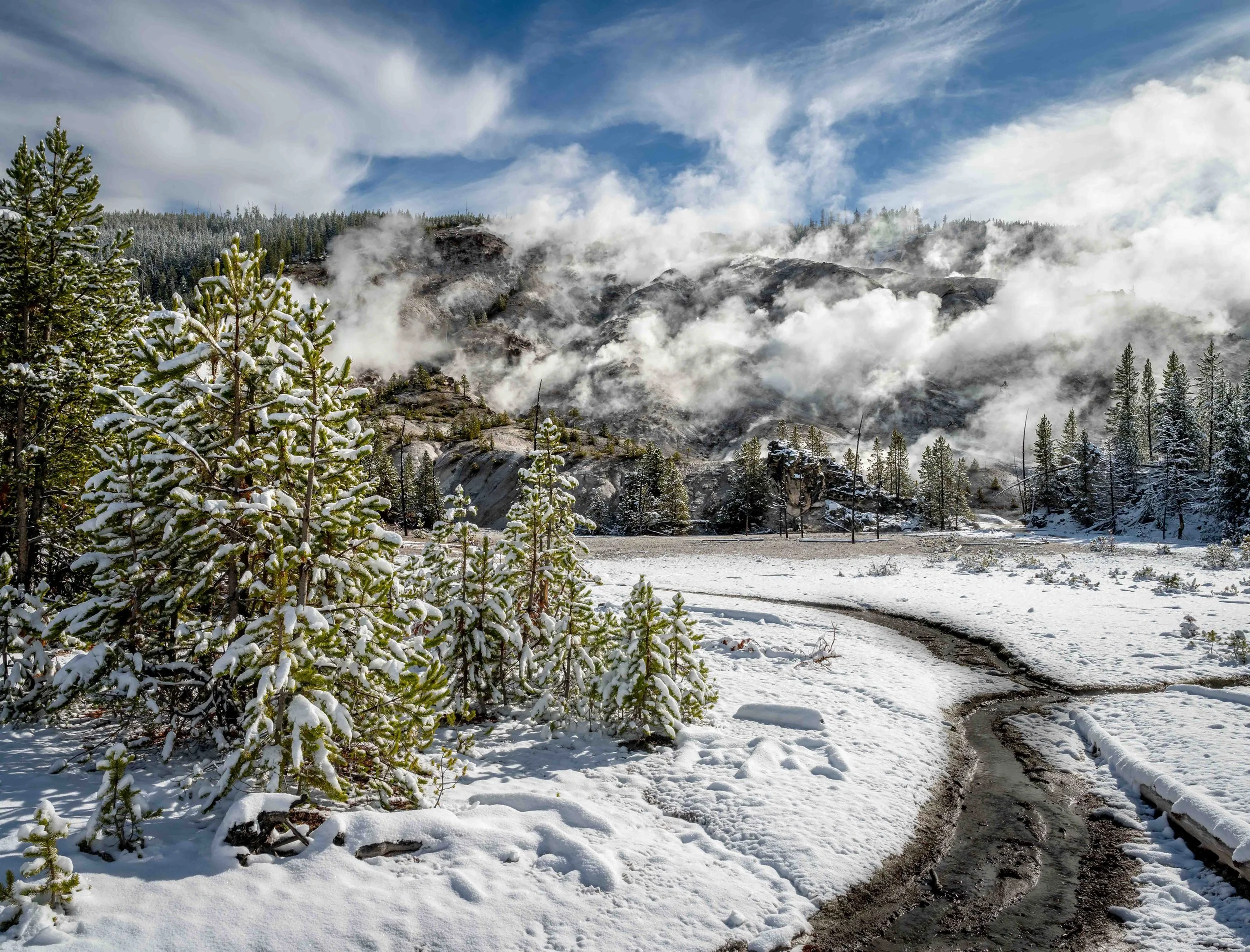
Steam rises from Roaring Mountain as snow reveals Yellowstone’s volcanic power.
The Madison River S-Curve at Early Morning
Few scenes in Yellowstone are as quietly powerful as the Madison River at dawn.
The river’s gentle S-curve leads the eye naturally through the frame, especially when mist rises from warm water into cold morning air. Early light brushes the surrounding hills, while reflections shimmer subtly on the river’s surface.
This is a classic Yellowstone scene, but one that never feels cliché. Each morning brings different light, different fog, and different color tones. Standing along the riverbank as the day begins is as much about experiencing the moment as capturing it.
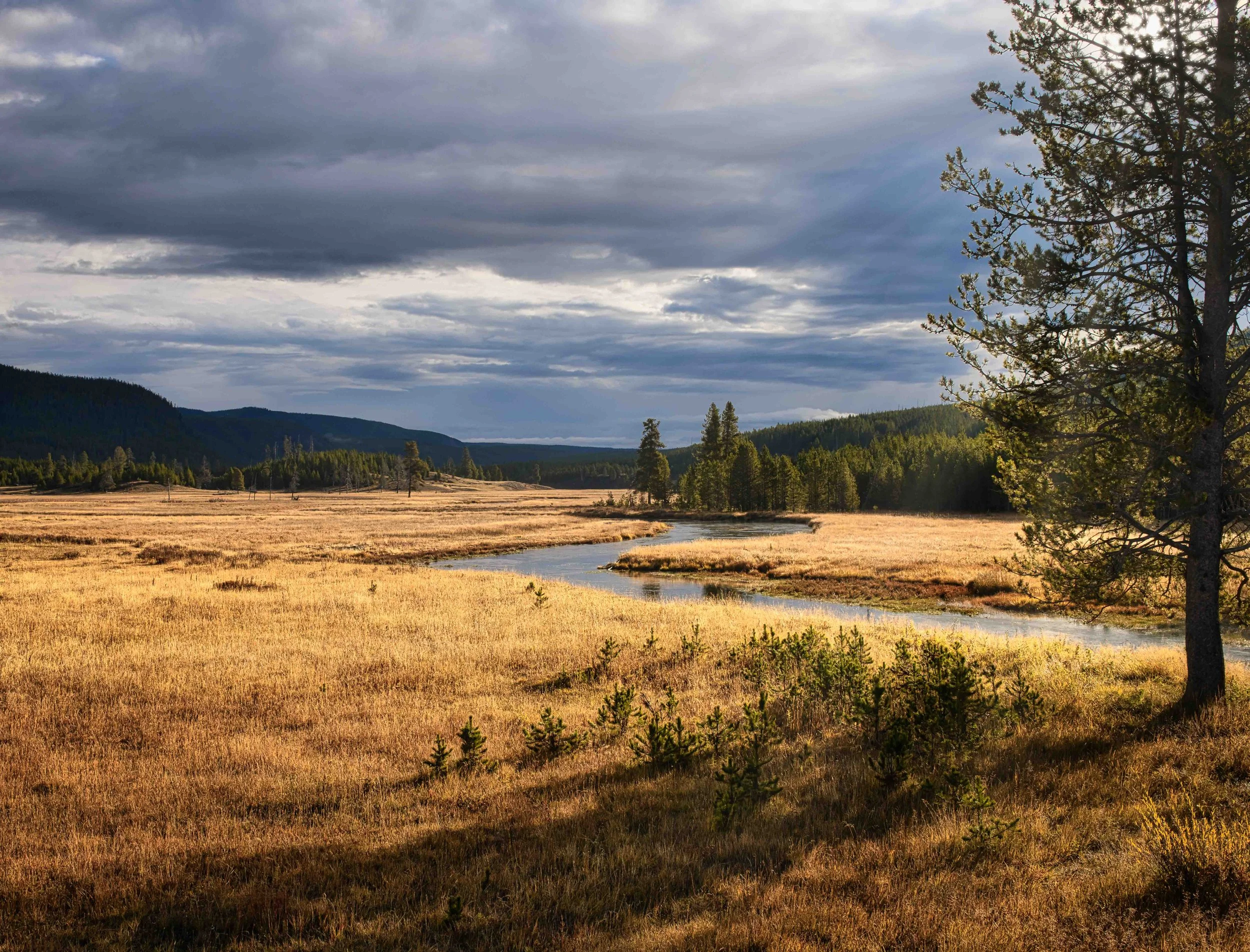
Early morning light and river mist shape the iconic S-curve of the Madison River.
Roosevelt Arch: History Framed in Stone
The Roosevelt Arch, located at Yellowstone’s North Entrance in Gardiner, Montana, is both a historical landmark and a symbolic gateway.
Constructed in 1903, the arch was dedicated by President Theodore Roosevelt in 1906. Carved into the stone are the words:
“For the Benefit and Enjoyment of the People.”
This phrase captures the very essence of the national park system.
Photographing the Roosevelt Arch works well at sunrise or sunset when warm light enhances the stone’s texture. Including surrounding hills or dramatic skies adds context and reinforces the arch’s role as a threshold between civilization and wilderness.
For photographers, the Roosevelt Arch isn’t just an architectural subject—it’s a reminder of why places like Yellowstone still exist.
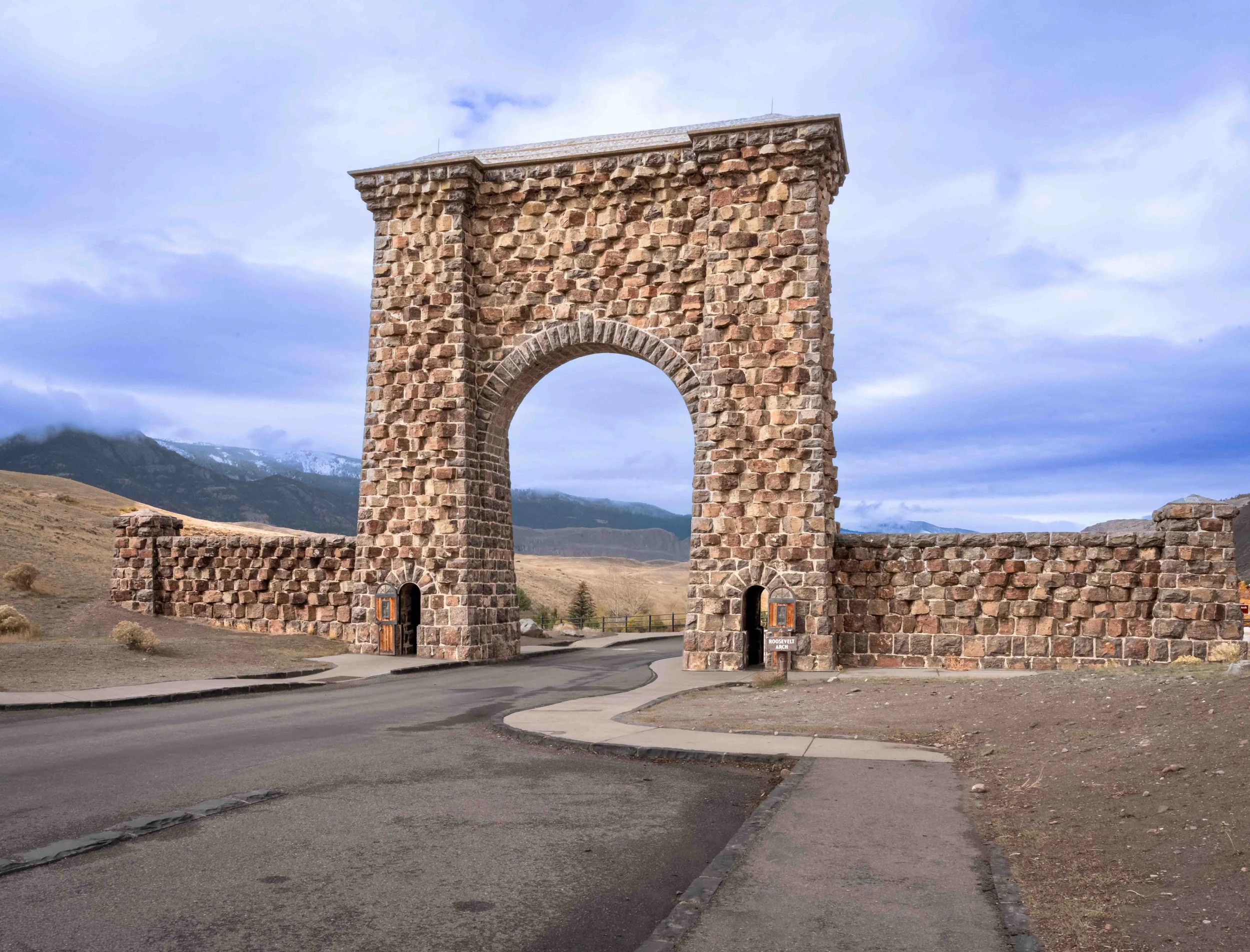
The Roosevelt Arch stands as Yellowstone’s historic gateway, dedicated “For the Benefit and Enjoyment of the People.”
Photography Tips for Visiting Yellowstone National Park
Yellowstone is one of those rare places where preparation matters just as much as creativity. Weather shifts quickly, wildlife follows its own schedule, and light often rewards those willing to start early and stay late. These tips will help you come home with stronger images—and a better overall experience.
1. Start Earlier Than You Think
Some of Yellowstone’s best moments happen before most visitors are awake. Early mornings bring:
Softer, directional light
Fewer people at popular locations
Calm winds for reflections
Wildlife activity near roads and rivers
Scenes like the Madison River S-curve, Swan Lake, and Mammoth Terraces are at their best around sunrise. Even arriving 15–20 minutes earlier than planned can make a noticeable difference.
2. Be Patient With Wildlife (and Use Distance)
Wildlife photography in Yellowstone is about observation, not pursuit. Animals appear when they want to, not on a schedule. Staying in one spot and watching behavior often leads to better images than driving nonstop.
Always maintain safe distances:
Bison: at least 25 yards
Bears and wolves: at least 100 yards
Using distance not only protects wildlife but also results in more natural-looking images that show animals in their environment rather than reacting to human presence.
3. Embrace Changing Weather
Yellowstone weather can change dramatically within minutes—and that’s a good thing. Snow, fog, rain, and steam often add mood and depth to images.
Some of the most compelling scenes happen:
During light snowfall (Roaring Mountain is a great example)
When fog settles into valleys at sunrise
Just after storms, when skies begin to break
Instead of waiting for “perfect” weather, lean into what the park gives you.
4. Think in Layers, Not Just Landmarks
Many Yellowstone scenes work best when you compose with foreground, midground, and background elements.
For example:
Water in the foreground at Swan Lake
Steam drifting across Mammoth Terraces
Rivers leading the eye through valleys
Layered compositions create depth and help tell a story rather than simply documenting a location.
5. Watch the Light, Not the Clock
Sunrise and sunset are important, but Yellowstone’s geography often means light behaves differently than expected. Mountains, steam, and weather can soften or delay light.
Stay longer than planned:
Morning fog often lifts slowly, revealing scenes in stages
Evening light can linger on peaks after the sun has set
Some of the best images happen when others are already packing up.
6. Keep Your Camera Accessible
Wildlife encounters and sudden light changes happen fast. Keeping your camera accessible—rather than buried in a bag—can mean the difference between capturing a moment and missing it entirely.
Even while driving:
Safely pull over when appropriate
Be ready for unexpected wildlife along roads
Yellowstone rewards those who stay alert.
7. Respect the Landscape
Yellowstone’s fragile ecosystem is part of what makes it special. Always:
Stay on boardwalks around geothermal areas
Avoid trampling vegetation for “better angles”
Follow park regulations
Photographing responsibly ensures these landscapes remain intact for future visitors and photographers.
8. Don’t Chase Every Shot
It’s tempting to rush from one famous location to the next, but Yellowstone shines when you slow down. Spending more time in fewer places often leads to stronger, more personal images.
Some of the most meaningful photographs come from:
Quiet roadside stops
Waiting for light to change
Observing small details others pass by
Yellowstone isn’t about collecting images—it’s about experiencing the park.
Why Yellowstone Continues to Inspire Photographers
Yellowstone doesn’t cater to quick wins. It demands early mornings, slow travel, patience with weather, and respect for wildlife. In return, it offers moments that feel deeply earned.
This park teaches photographers to slow down—to watch light change, to wait for wildlife to move naturally, and to embrace imperfection. Some of the most meaningful images come from unexpected moments rather than planned shots.
Yellowstone isn’t just photographed—it’s experienced.
Comments are always welcome.
You can see more images from Yellowstone National Park on my website at the following link.